

FD ISO/TR 13989-2
FD ISO/TR 13989-2

FD ISO/TR 13989-2

August 2000
Published document Cancelled

Calculation of scuffing load capacity of cylindrical, bevel and hypoid gears - Part 2 : integral temperature method

Le présent document décrit la méthode de la température intégrale, basée sur la moyenne pondérée des températures de contact sur la longueur de conduite, destinée à calculer la capacité de charge au grippage des engrenages cylindriques, coniques et hypoïdes.La partie 1 traite de la méthode de la température-éclair.

Main informations

Collections

National standards and national normative documents

Publication date

August 2000

Number of pages

55 p.

Reference

FD ISO/TR 13989-2

ICS Codes

21.200   Gears

Classification index

E23-033-2

Print number

1 - novembre 2005

International kinship

ISO/TR 13989-2:2000
Sumary
Calculation of scuffing load capacity of cylindrical, bevel and hypoid gears - Part 2 : integral temperature method

Le présent document décrit la méthode de la température intégrale, basée sur la moyenne pondérée des températures de contact sur la longueur de conduite, destinée à calculer la capacité de charge au grippage des engrenages cylindriques, coniques et hypoïdes. La partie 1 traite de la méthode de la température-éclair.
Standard replaced by (1)
XP ISO/TS 6336-21
XP ISO/TS 6336-21
April 2018
Standard Cancelled
Calculation of load capacity of spur and helical gears - Part 21 : calculation of scuffing load capacity (also applicable to bevel and hypoid gears) - Integral temperature method

ISO/TS 6336-21:2017 specifies the integral temperature method for calculating the scuffing load capacity of cylindrical, bevel and hypoid gears.

Table of contents
  • Avant-propos
  • 1 Domaine d'application
  • 2 Références normatives
  • 3 Termes, définitions, symboles et unités
  • 4
  • 5 Facteurs d'influence
  • 6 Calcul
  • Annexe A (informative) Exemples
  • Annexe B (informative) Température de grippage en fonction de la durée de contact
  • Bibliographie
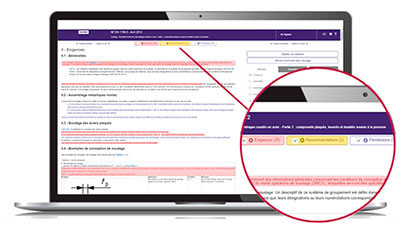
ZOOM ON ... the Requirements department

To comply with a standard, you need to quickly understand its issues in order to determine its impact on your activity.

The Requirements department helps you quickly locate within the normative text:

  • mandatory clauses to satisfy,
  • non-essential but useful clauses to know, such as permissions and recommendations.

The identification of these types of clauses is based on the document "ISO/IEC Directives, Part 2 - Principles and rules of structure and drafting of ISO documents" as well as on a constantly enriched list of verbal forms.

With Requirements, quickly access the main part of the normative text!


New: UPSELL service
Need to identify, monitor and decipher standards?