

FD X50-189
FD X50-189

FD X50-189

July 2021
Published document Current

Management Systems - Guidelines for their integration

Avant-propos1 Pourquoi et pour qui mettre en oeuvre un Système de Management Intégré (SMI)2 Domaine d'application3 Méthodologie de mise en oeuvre proposée4 Contexte5 Leadership6 Planification7 Support8 Réalisation des activités opérationnelles9 Évaluation des performances10 AméliorationAnnexe A (informative) Exemples d'audits combinésAnnexe B (informative) Exemples d'indicateursAnnexe C (informative)Bibliographie

Main informations

Collections

National standards and national normative documents

Thematics

Management et performance

Publication date

July 2021

Number of pages

50 p.

Reference

FD X50-189

ICS Codes

03.100.70   Management systems
03.120.10   Quality management and quality assurance

Print number

1
Sumary
Management Systems - Guidelines for their integration

Avant-propos

1 Pourquoi et pour qui mettre en oeuvre un Système de Management Intégré (SMI)

2 Domaine d'application

3 Méthodologie de mise en oeuvre proposée

4 Contexte

5 Leadership

6 Planification

7 Support

8 Réalisation des activités opérationnelles

9 Évaluation des performances

10 Amélioration

Annexe A (informative) Exemples d'audits combinés

Annexe B (informative) Exemples d'indicateurs

Annexe C (informative)

Bibliographie

Replaced standards (1)
FD X50-189
FD X50-189
January 2004
Published document Cancelled
Management systems - Guidelines for their integration

Le présent document expose les raisons qui ont conduit à l'apparition du concept de système de management intégré. Il propose des lignes directrices pour la rationalisation et la formalisation totale du système de management d'un organisme, soit directement, soit par intégration progressive des sous-systèmes de management déjà formalisés.

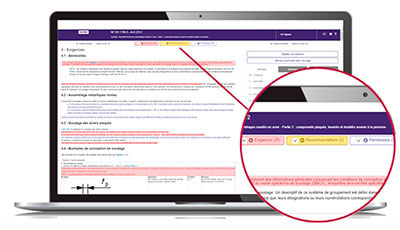
ZOOM ON ... the Requirements department

To comply with a standard, you need to quickly understand its issues in order to determine its impact on your activity.

The Requirements department helps you quickly locate within the normative text:

  • mandatory clauses to satisfy,
  • non-essential but useful clauses to know, such as permissions and recommendations.

The identification of these types of clauses is based on the document "ISO/IEC Directives, Part 2 - Principles and rules of structure and drafting of ISO documents" as well as on a constantly enriched list of verbal forms.

With Requirements, quickly access the main part of the normative text!


New: UPSELL service
Need to identify, monitor and decipher standards?