
IEC 60068-2-14:2009
Collections
International IEC standards
Publication date
January 2009
Reference
IEC 60068-2-14:2009
ICS Codes
19.040 Environmental testing

IEC 60068-2-14:2009 provides a test to determine the ability of components, equipment or other articles to withstand rapid changes of ambient temperature. The exposure times adequate to accomplish this will depend upon the nature of the specimen. The major changes with regard to the previous edition concern:- merging of the previous version of IEC 60068-2-14 with IEC 60068-2-33: Guidance on change of temperature tests;- updating of the figures, changes to some of the wording and editorial corrections made for clarification.
Guidance for Test N: Change of temperature (IEC 68-2-14).
Gives guidance to designers and testing personnel on the specification and use of change of temperature tests. A change of temperature test is intended to determine the effect on the specimen of a change of temperature or a succession of changes of temperature.
Determines the ability of components, equipment and other articles to withstand rapid changes of ambient temperature. The exposure times to accomplish this depend upon the nature of the specimen. Has the status of a basic safety publication in accordance with IEC Guide 104.
IEC 60068-2-14:2023 provides tests with specified ambient temperature changes to analyse their impacts on specimens. This seventh edition cancels and replaces the sixth edition published in 2009. This edition constitutes a technical revision. This edition includes the following significant technical changes with respect to the previous edition: a) updating of the figures for clarification purposes; b) updating of specimen temperature(s) and severities as well as tolerances for change of temperature tests; c) revision of standardized requirements for test reports for Tests Na and Nb.
To comply with a standard, you need to quickly understand its issues in order to determine its impact on your activity.
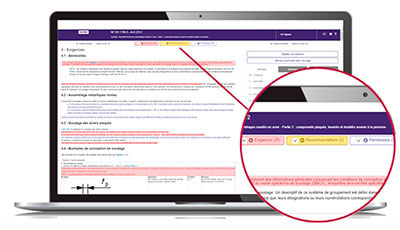
The Requirements department helps you quickly locate within the normative text:
The identification of these types of clauses is based on the document "ISO/IEC Directives, Part 2 - Principles and rules of structure and drafting of ISO documents" as well as on a constantly enriched list of verbal forms.
With Requirements, quickly access the main part of the normative text!
COBAZ is the simple and effective solution to meet the normative needs related to your activity, in France and abroad.
Available by subscription, CObaz is THE modular solution to compose according to your needs today and tomorrow. Quickly discover CObaz!
Request your free, no-obligation live demo
I discover COBAZ