IEC 61249-2-44:2016
IEC 61249-2-44:2016

IEC 61249-2-44:2016

May 2016
International standard Current

Materials for printed boards and other interconnecting structures - Part 2-44: Reinforced base materials clad and unclad - Non-halogenated epoxide non-woven/woven E-glass reinforced laminate sheets of defined flammability (vertical burning test), copper-clad for lead-free assembly

IEC 61249-2-44:2016 gives requirements for properties of non-halogenated epoxide non-woven reinforced core/woven E-glass reinforced surface laminate sheets of defined flammability (vertical burning test), copper-clad for lead-free assembly in thicknesses of 0,60 mm up to 1,70 mm. The flammability rating is achieved through the use of non-halogenated fire retardants reacted as part of the epoxide polymeric structure. The glass transition temperature is defined to be 105 °C minimum.

Main informations

Collections

International IEC standards

Publication date

May 2016

Number of pages

42 p.

Reference

IEC 61249-2-44:2016

ICS Codes

31.180   Printed circuits and boards
Sumary
Materials for printed boards and other interconnecting structures - Part 2-44: Reinforced base materials clad and unclad - Non-halogenated epoxide non-woven/woven E-glass reinforced laminate sheets of defined flammability (vertical burning test), copper-clad for lead-free assembly

IEC 61249-2-44:2016 gives requirements for properties of non-halogenated epoxide non-woven reinforced core/woven E-glass reinforced surface laminate sheets of defined flammability (vertical burning test), copper-clad for lead-free assembly in thicknesses of 0,60 mm up to 1,70 mm. The flammability rating is achieved through the use of non-halogenated fire retardants reacted as part of the epoxide polymeric structure. The glass transition temperature is defined to be 105 °C minimum.
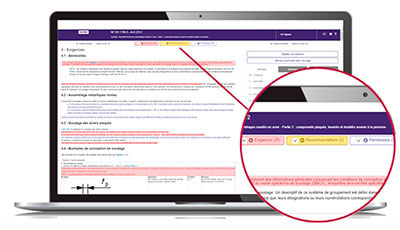
ZOOM ON ... the Requirements department

To comply with a standard, you need to quickly understand its issues in order to determine its impact on your activity.

The Requirements department helps you quickly locate within the normative text:

  • mandatory clauses to satisfy,
  • non-essential but useful clauses to know, such as permissions and recommendations.

The identification of these types of clauses is based on the document "ISO/IEC Directives, Part 2 - Principles and rules of structure and drafting of ISO documents" as well as on a constantly enriched list of verbal forms.

With Requirements, quickly access the main part of the normative text!

Need to identify, monitor and decipher standards?