IEC 61650:1997
IEC 61650:1997

IEC 61650:1997

August 1997
International standard Current

Reliability data analysis techniques - Procedures for comparison of two constant failure rates and two constant failure (event) intensities

Specifies procedures to compare two observed - failure rates; - failure intensities; - rates/intensities of relevant events. The procedures are used to determine whether an apparent difference between the two sets of observations can be considered statistically significant. Numerical methods and a graphical procedure are prescribed. Simple practical examples are provided to illustrate how the procedures can be applied.

Main informations

Collections

International IEC standards

Publication date

August 1997

Reference

IEC 61650:1997

ICS Codes

03.120.01   Quality in general
03.120.30   Application of statistical methods
Sumary
Reliability data analysis techniques - Procedures for comparison of two constant failure rates and two constant failure (event) intensities

Specifies procedures to compare two observed - failure rates; - failure intensities; - rates/intensities of relevant events. The procedures are used to determine whether an apparent difference between the two sets of observations can be considered statistically significant. Numerical methods and a graphical procedure are prescribed. Simple practical examples are provided to illustrate how the procedures can be applied.
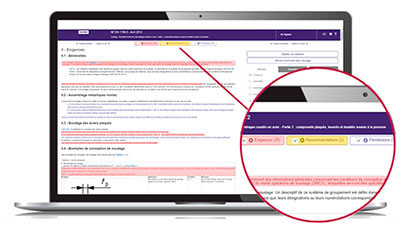
ZOOM ON ... the Requirements department

To comply with a standard, you need to quickly understand its issues in order to determine its impact on your activity.

The Requirements department helps you quickly locate within the normative text:

  • mandatory clauses to satisfy,
  • non-essential but useful clauses to know, such as permissions and recommendations.

The identification of these types of clauses is based on the document "ISO/IEC Directives, Part 2 - Principles and rules of structure and drafting of ISO documents" as well as on a constantly enriched list of verbal forms.

With Requirements, quickly access the main part of the normative text!

Need to identify, monitor and decipher standards?