

IEC 62037-2:2012
IEC 62037-2:2012

IEC 62037-2:2012

November 2012
International standard Cancelled

Passive RF and microwave devices, intermodulation level measurement - Part 2: Measurement of passive intermodulation in coaxial cable assemblies

IEC 62037-2:2012 defines a procedure to measure levels of passive intermodulation generated by a coaxial cable assembly. This test method is applicable to jumper cables, i.e. cable assemblies intended to provide interface flexibility between rigid devices.

Main informations

Collections

International IEC standards

Publication date

November 2012

Number of pages

7 p.

Reference

IEC 62037-2:2012

ICS Codes

33.120.10   Coaxial cables. Waveguides
33.040.20   Transmission systems
Sumary
Passive RF and microwave devices, intermodulation level measurement - Part 2: Measurement of passive intermodulation in coaxial cable assemblies

IEC 62037-2:2012 defines a procedure to measure levels of passive intermodulation generated by a coaxial cable assembly. This test method is applicable to jumper cables, i.e. cable assemblies intended to provide interface flexibility between rigid devices.
Standard replaced by (1)
IEC 62037-2:2021
IEC 62037-2:2021
November 2021
International standard Current
Passive RF and microwave devices, intermodulation level measurement - Part 2: Measurement of passive intermodulation in coaxial cable assemblies

IEC 62037-2:2021 defines a procedure to measure levels of passive intermodulation generated by a coaxial cable assembly. This test method is applicable to jumper cables, i.e. cable assemblies intended to provide interface flexibility between rigid devices. It is also used to evaluate cable assemblies that are subjected to motion in operation. This second edition cancels and replaces the first edition published in 2012. This edition includes the following significant technical changes with respect to the previous edition: a. criteria for application of mechanical stress revised to be a function of advertised cable bend radius.

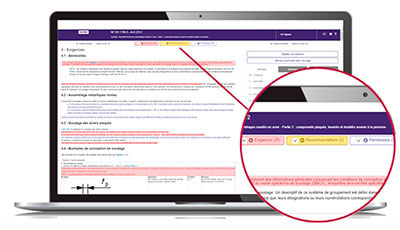
ZOOM ON ... the Requirements department

To comply with a standard, you need to quickly understand its issues in order to determine its impact on your activity.

The Requirements department helps you quickly locate within the normative text:

  • mandatory clauses to satisfy,
  • non-essential but useful clauses to know, such as permissions and recommendations.

The identification of these types of clauses is based on the document "ISO/IEC Directives, Part 2 - Principles and rules of structure and drafting of ISO documents" as well as on a constantly enriched list of verbal forms.

With Requirements, quickly access the main part of the normative text!


Need to identify, monitor and decipher standards?