IEC 62220-1-1:2015
IEC 62220-1-1:2015

IEC 62220-1-1:2015

March 2015
International standard Current

Medical electrical equipment - Characteristics of digital X-ray imaging devices - Part 1-1: Determination of the detective quantum efficiency - Detectors used in radiographic imaging

IEC 62220-1-1:2015 specifies the method for the determination of the DETECTIVE QUANTUM EFFICIENCY (DQE) of DIGITAL X-RAY IMAGING DEVICES as a function of AIR KERMA and of SPATIAL FREQUENCY for the working conditions in the range of the medical application as specified by the MANUFACTURER. The intended users of this part of IEC 62220 are manufacturers and well equipped test laboratories. This first edition of IEC 62220-1-1 cancels and replaces IEC 62220-1:2003. It constitutes a technical revision of IEC 62220-1:2003 and assures a better alignment with the other parts of the IEC 62220 series. The main changes are as follows:- necessary modifications have been applied as a consequence of taking into account IEC 61267:2005. This influences HVL values and SNRin2;- the method for the determination of LAG EFFECTS now considers lag and ghosting compensation;- as part of the MTF determination, the method of obtaining the final averaged MTF has been restricted (only averaging of the ESF is allowed);- a description of (optionally) obtaining the diagonal (45°) MTF and NPS has been added.

Main informations

Collections

International IEC standards

Publication date

March 2015

Number of pages

74 p.

Reference

IEC 62220-1-1:2015

ICS Codes

11.040.50   Radiographic equipment
Sumary
Medical electrical equipment - Characteristics of digital X-ray imaging devices - Part 1-1: Determination of the detective quantum efficiency - Detectors used in radiographic imaging

IEC 62220-1-1:2015 specifies the method for the determination of the DETECTIVE QUANTUM EFFICIENCY (DQE) of DIGITAL X-RAY IMAGING DEVICES as a function of AIR KERMA and of SPATIAL FREQUENCY for the working conditions in the range of the medical application as specified by the MANUFACTURER. The intended users of this part of IEC 62220 are manufacturers and well equipped test laboratories. This first edition of IEC 62220-1-1 cancels and replaces IEC 62220-1:2003. It constitutes a technical revision of IEC 62220-1:2003 and assures a better alignment with the other parts of the IEC 62220 series. The main changes are as follows:
- necessary modifications have been applied as a consequence of taking into account IEC 61267:2005. This influences HVL values and SNRin2;
- the method for the determination of LAG EFFECTS now considers lag and ghosting compensation;
- as part of the MTF determination, the method of obtaining the final averaged MTF has been restricted (only averaging of the ESF is allowed);
- a description of (optionally) obtaining the diagonal (45°) MTF and NPS has been added.
Replaced standards (1)
IEC 62220-1:2003
IEC 62220-1:2003
October 2003
International standard Cancelled
Medical electrical equipment - Characteristics of digital X-ray imaging devices - Part 1: Determination of the detective quantum efficiency

Specifies the method for the determination of the detective quantum efficiency (DQE) of digital X-ray imaging devices as a function of exposure and of spatial frequency for the working conditions in the range of the medical application as specified by the manufacturer. Is applicable to projection digital X-ray imaging devices producing images in digital format that are used for medical diagnosis. It is restricted to digital X-ray imaging devices that are used for radiographic imaging, such as CR systems, selenium-based systems, flat panel detectors, optically coupled CCD detectors, and digital X-ray image intensifiers used for single exposures.

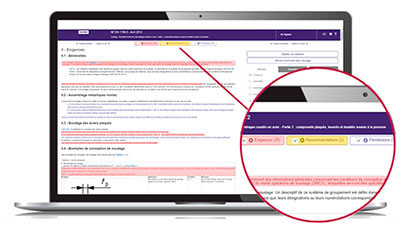
ZOOM ON ... the Requirements department

To comply with a standard, you need to quickly understand its issues in order to determine its impact on your activity.

The Requirements department helps you quickly locate within the normative text:

  • mandatory clauses to satisfy,
  • non-essential but useful clauses to know, such as permissions and recommendations.

The identification of these types of clauses is based on the document "ISO/IEC Directives, Part 2 - Principles and rules of structure and drafting of ISO documents" as well as on a constantly enriched list of verbal forms.

With Requirements, quickly access the main part of the normative text!

Need to identify, monitor and decipher standards?