

IEC 62298-1:2005
IEC 62298-1:2005

IEC 62298-1:2005

May 2005
International standard Current

Teleweb application - Part 1: General description

IEC 62298-1:2005 gives a general overview of the TeleWeb application that allows Web-style text and graphics to be broadcast to, and displayed by, suitable decoders. TeleWeb services can be broadcast in a number of different ways, for example, VBI, DVB, DAB, etc., and to a variety of decoder types, for example, TVs, portable decoders, PCs, etc. These transmission protocols are described separately. This bilingual version (2013-07) corresponds to the monolingual English version, published in 2005-10. It cancels and replaces IEC/PAS 62298 published in 2002.

Main informations

Collections

International IEC standards

Publication date

May 2005

Number of pages

16 p.

Reference

IEC 62298-1:2005

ICS Codes

33.170   Television and radio broadcasting
35.240.99   IT applications in other fields
Sumary
Teleweb application - Part 1: General description

IEC 62298-1:2005 gives a general overview of the TeleWeb application that allows Web-style text and graphics to be broadcast to, and displayed by, suitable decoders. TeleWeb services can be broadcast in a number of different ways, for example, VBI, DVB, DAB, etc., and to a variety of decoder types, for example, TVs, portable decoders, PCs, etc. These transmission protocols are described separately. This bilingual version (2013-07) corresponds to the monolingual English version, published in 2005-10. It cancels and replaces IEC/PAS 62298 published in 2002.
Replaced standards (1)
IEC PAS 62298:2002
IEC PAS 62298:2002
January 2002
Standard Cancelled
TeleWeb Application Profile 1 Reference Decoder

Provides the specification for the TeleWeb application, permitting web-style text and graphics to be broadcast to and displayed by suitable decoders, for example teletext decoders.

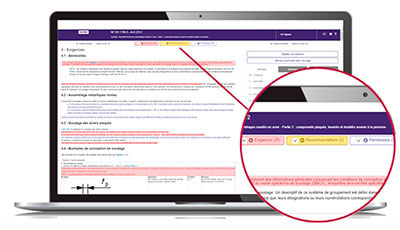
ZOOM ON ... the Requirements department

To comply with a standard, you need to quickly understand its issues in order to determine its impact on your activity.

The Requirements department helps you quickly locate within the normative text:

  • mandatory clauses to satisfy,
  • non-essential but useful clauses to know, such as permissions and recommendations.

The identification of these types of clauses is based on the document "ISO/IEC Directives, Part 2 - Principles and rules of structure and drafting of ISO documents" as well as on a constantly enriched list of verbal forms.

With Requirements, quickly access the main part of the normative text!


Need to identify, monitor and decipher standards?