IEC 62321-3-1:2026
Determination of certain substances in electrotechnical products - Part 3-1: Screening - Lead, mercury, cadmium, total chromium, total bromine, total phosphorus, total chlorine, total tin and total antimony content by X-ray fluorescence spectrometry
IEC 62321-3-1:2026 is available as IEC 62321-3-1:2026 RLV which contains the International Standard and its Redline version, showing all changes of the technical content compared to the previous edition.IEC 62321-3-1:2026 describes the screening analysis of substances, specifically lead (Pb), mercury (Hg), cadmium (Cd), total chromium (Cr), total bromine (Br), total phosphorus (P), assuming the source of P is related to TCEP (CAS 115‑96‑8), Trixylyl-phosphate (CAS 25155‑23‑1), total chlorine (Cl), assuming the source of Cl is related to SCCP (CAS 85535‑84‑8), TCEP (CAS 115‑96‑8) , TBTC (CAS 1461‑22‑9), total tin (Sn), assuming the source of Sn is related to restricted organo-tin compounds, total antimony (Sb), assuming the source of Sb is related to Pyrochlore, and antimony lead yellow (CAS 8012‑00‑8) in uniform materials found in electrotechnical products, using the analytical technique of X‑ray fluorescence (XRF) spectrometry.This edition includes the following significant technical changes with respect to the previous editions of IEC 62321-3-1:2013 and IEC 62321:2008:a) This second edition of IEC 62321-3-1 includes the analysis of additional elements as indicators for additional substances. The selection is based on IEC TR 62936:2016. There are also comments about using the same methology for screening for content of critical raw materials (CRMs).This document has been given the status of a horizontal document in accordance with the ISO/IEC Directives, Part 1.

IEC 62321-3-1:2026 is available as IEC 62321-3-1:2026 RLV which contains the International Standard and its Redline version, showing all changes of the technical content compared to the previous edition.
IEC 62321-3-1:2026 describes the screening analysis of substances, specifically lead (Pb), mercury (Hg), cadmium (Cd), total chromium (Cr), total bromine (Br), total phosphorus (P), assuming the source of P is related to TCEP (CAS 115‑96‑8), Trixylyl-phosphate (CAS 25155‑23‑1), total chlorine (Cl), assuming the source of Cl is related to SCCP (CAS 85535‑84‑8), TCEP (CAS 115‑96‑8) , TBTC (CAS 1461‑22‑9), total tin (Sn), assuming the source of Sn is related to restricted organo-tin compounds, total antimony (Sb), assuming the source of Sb is related to Pyrochlore, and antimony lead yellow (CAS 8012‑00‑8) in uniform materials found in electrotechnical products, using the analytical technique of X‑ray fluorescence (XRF) spectrometry.
This edition includes the following significant technical changes with respect to the previous editions of IEC 62321-3-1:2013 and IEC 62321:2008:
a) This second edition of IEC 62321-3-1 includes the analysis of additional elements as indicators for additional substances. The selection is based on IEC TR 62936:2016. There are also comments about using the same methology for screening for content of critical raw materials (CRMs).
This document has been given the status of a horizontal document in accordance with the ISO/IEC Directives, Part 1.
IEC 62321:2008, which is an International Standard, specifies the determination of the levels of lead (Pb), mercury (Hg), cadmium (Cd), hexavalent chromium (Cr(VI)) contained in inorganic and organic compounds, and two types of brominated flame retardants, polybrominated biphenyls (PBB) and polybrominated diphenyl ethers (PBDE) contained in electrotechnical products. This standard refers to the sample as the object to be processed and measured. The nature of the sample and the manner in which it is acquired is defined by the entity carrying out the tests and not by this standard. It has the status of a horizontal standard in accordance with IEC Guide 108.
IEC 62321-3-1:2013 describes the screening analysis of five substances, specifically lead (Pb), mercury (Hg), cadmium (Cd), total chromium (Cr) and total bromine (Br) in uniform materials found in electrotechnical products, using the analytical technique of X-ray fluorescence (XRF) spectrometry. IEC 62321-3-1:2013 has the status of a horizontal standard in accordance with IEC Guide 108.
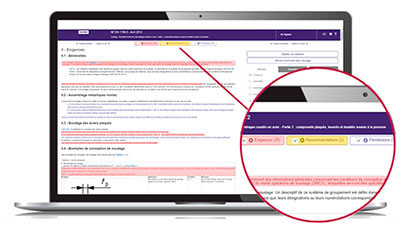
The Requirements department helps you quickly locate within the normative text:
- mandatory clauses to satisfy,
- non-essential but useful clauses to know, such as permissions and recommendations.
The identification of these types of clauses is based on the document “ISO / IEC Directives, Part 2 - Principles and rules of structure and drafting of ISO documents ”as well as on a constantly enriched list of verbal forms.
With Requirements, quickly access the main part of the normative text!

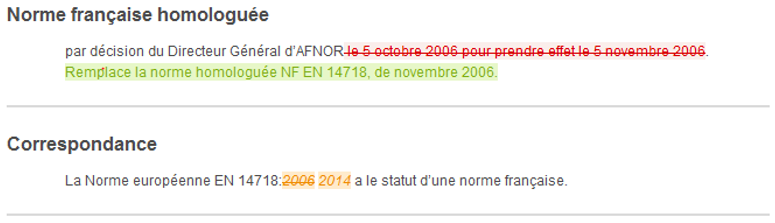
At a glance, you will be able to identify the additions, deletions or modifications to a text, table, figure and formula.

The Redlines + service is offered to you on the collection of French standards in force, in French language and in HTML and PDF format.
For an overview of the service, click on View a standard in redline format
COBAZ is the simple and effective solution to meet the normative needs related to your activity, in France and abroad.
Available by subscription, CObaz is THE modular solution to compose according to your needs today and tomorrow. Quickly discover CObaz!
Request your free, no-obligation live demo
I discover COBAZ