

IEC 62424:2016
IEC 62424:2016

IEC 62424:2016

July 2016
International standard Current

Representation of process control engineering - Requests in P&I diagrams and data exchange between P&ID tools and PCE-CAE tools

IEC 62424:2016 specifies how process control engineering requests are represented in a P&ID for automatic transferring data between P&ID and PCE tool and to avoid misinterpretation of graphical P&ID symbols for PCE. It also defines the exchange of process control engineering request relevant data between a process control engineering tool and a P&ID tool by means of a data transfer language (called CAEX). These provisions apply to the export/import applications of such tools. This second edition cancels and replaces the first edition published in 2008. This edition constitutes a technical revision. It is a compatible extension of the first edition. The main changes and extensions are:- updated definitions and new definitions;- identification replaced with reference designation;- updated PCE categories and process functions;- CAEX version 3.0, introduction of: native multiple role support;- nested interfaces;- life cycle meta information;- a separate Attribute library;- updated examples;- updated electronic data model of the PCE request: new normative attribute library for basic PCE request attributes;- new informative extended attribute library for further PCE request attributes;- new informative electronic data model for the PCE request.

Main informations

Collections

International IEC standards

Publication date

July 2016

Number of pages

344 p.

Reference

IEC 62424:2016

ICS Codes

25.040.40   Industrial process measurement and control
35.240.50   IT applications in industry
Sumary
Representation of process control engineering - Requests in P&I diagrams and data exchange between P&ID tools and PCE-CAE tools

IEC 62424:2016 specifies how process control engineering requests are represented in a P&ID for automatic transferring data between P&ID and PCE tool and to avoid misinterpretation of graphical P&ID symbols for PCE. It also defines the exchange of process control engineering request relevant data between a process control engineering tool and a P&ID tool by means of a data transfer language (called CAEX). These provisions apply to the export/import applications of such tools. This second edition cancels and replaces the first edition published in 2008. This edition constitutes a technical revision. It is a compatible extension of the first edition. The main changes and extensions are:
- updated definitions and new definitions;
- identification replaced with reference designation;
- updated PCE categories and process functions;
- CAEX version 3.0, introduction of: native multiple role support;
- nested interfaces;
- life cycle meta information;
- a separate Attribute library;
- updated examples;
- updated electronic data model of the PCE request: new normative attribute library for basic PCE request attributes;
- new informative extended attribute library for further PCE request attributes;
- new informative electronic data model for the PCE request.
Replaced standards (1)
IEC 62424:2008
IEC 62424:2008
August 2008
International standard Cancelled
Representation of process control engineering - Requests in P&I diagrams and data exchange between P&ID tools and PCE-CAE tools

IEC 62424:2008 specifies how process control engineering requests are represented in a P&ID for automatic transferring data between P&ID and PCE tool and to avoid misinterpretation of graphical P&ID symbols for PCE. It also defines the exchange of process control engineering request relevant data between a process control engineering tool and a P&ID tool by means of a data transfer language (called CAEX). These provisions apply to the export/import applications of such tools. It cancels and replaces IEC/PAS 62424 published in 2005. This first edition constitutes a technical revision.

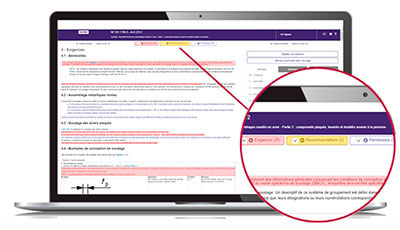
ZOOM ON ... the Requirements department

To comply with a standard, you need to quickly understand its issues in order to determine its impact on your activity.

The Requirements department helps you quickly locate within the normative text:

  • mandatory clauses to satisfy,
  • non-essential but useful clauses to know, such as permissions and recommendations.

The identification of these types of clauses is based on the document "ISO/IEC Directives, Part 2 - Principles and rules of structure and drafting of ISO documents" as well as on a constantly enriched list of verbal forms.

With Requirements, quickly access the main part of the normative text!


Need to identify, monitor and decipher standards?