IEC 62746-10-1:2018
IEC 62746-10-1:2018

IEC 62746-10-1:2018

November 2018
International standard Current

Systems interface between customer energy management system and the power management system - Part 10-1: Open automated demand response

IEC 62746-10-1:2018 specifies a minimal data model and services for demand response (DR), pricing, and distributed energy resource (DER) communications. This document can be leveraged to manage customer energy resources, including load, generation, and storage, via signals provided by grid and/or market operators. These resources can be identified and managed as individual resources with specific capabilities, or as virtual resources with an aggregated set of capabilities. It specifies how to implement a two-way signaling system to facilitate information exchange between electricity service providers, aggregators, and end users. The DR signalling system is described in terms of servers (virtual top nodes or VTNs), which publish information to automated clients (virtual end nodes, or VENs), which in turn subscribe to the information. The services make no assumption of specific DR electric load control strategies that can be used within a DR resource or of any market-specific contractual or business agreements between electricity service providers and their customers.


Main informations

Collections

International IEC standards

Publication date

November 2018

Number of pages

207 p.

Reference

IEC 62746-10-1:2018

ICS Codes

33.200   Telecontrol. Telemetering
Sumary
Systems interface between customer energy management system and the power management system - Part 10-1: Open automated demand response

IEC 62746-10-1:2018 specifies a minimal data model and services for demand response (DR), pricing, and distributed energy resource (DER) communications. This document can be leveraged to manage customer energy resources, including load, generation, and storage, via signals provided by grid and/or market operators. These resources can be identified and managed as individual resources with specific capabilities, or as virtual resources with an aggregated set of capabilities. It specifies how to implement a two-way signaling system to facilitate information exchange between electricity service providers, aggregators, and end users. The DR signalling system is described in terms of servers (virtual top nodes or VTNs), which publish information to automated clients (virtual end nodes, or VENs), which in turn subscribe to the information. The services make no assumption of specific DR electric load control strategies that can be used within a DR resource or of any market-specific contractual or business agreements between electricity service providers and their customers.
Replaced standards (1)
IEC PAS 62746-10-1:2014
February 2014
Standard Cancelled
Systems interface between customer energy management system and the power management system - Part 10-1: Open Automated Demand Response (OpenADR 2.0b Profile Specification)

IEC PAS 62746-10-1:2014-02(en), originally designated as OpenADR 2.0b profile specification, is a flexible data model to facilitate common information exchange between electricity service providers, aggregators, and end users. The concept of an open specification is intended to allow anyone to implement the two-way signalling systems, providing the servers, which publish information to the automated clients, which subscribe the information. This OpenADR 2.0 profile specification covers the signalling data models and includes information related to specific DR (Demand Response) electric reduction or shifting strategies, which are taken at the facility. The PDF version of the standard is accompanied by Profile B Schema files.

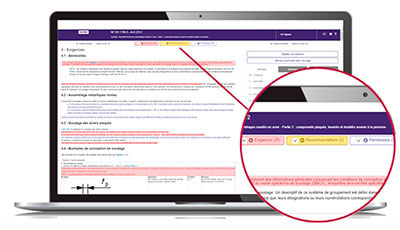
ZOOM ON ... the Requirements department

To comply with a standard, you need to quickly understand its issues in order to determine its impact on your activity.

The Requirements department helps you quickly locate within the normative text:

  • mandatory clauses to satisfy,
  • non-essential but useful clauses to know, such as permissions and recommendations.

The identification of these types of clauses is based on the document "ISO/IEC Directives, Part 2 - Principles and rules of structure and drafting of ISO documents" as well as on a constantly enriched list of verbal forms.

With Requirements, quickly access the main part of the normative text!


Need to identify, monitor and decipher standards?