

ISO 105-J03:2009
ISO 105-J03:2009

ISO 105-J03:2009

September 2009
International standard Current

Textiles — Tests for colour fastness — Part J03: Calculation of colour differences

ISO 105-J03:2009 provides a method of calculating the colour difference between two specimens of the same material, measured under the same conditions, such that the numerical value ∆Ecmc(l:c) for the total colour difference quantifies the extent to which the two specimens do not match. It permits the specification of a maximum value (tolerance) which depends only on the closeness of match required for a given end-use and not on the colour involved, nor on the nature of the colour difference. The method also provides a means for establishing the ratio of differences in lightness to chroma and to hue.

View the extract
Main informations

Collections

International ISO standards

Publication date

September 2009

Number of pages

10 p.

Reference

ISO 105-J03:2009

ICS Codes

59.080.01   Textiles in general

Print number

2 - octobre 2009
Sumary
Textiles — Tests for colour fastness — Part J03: Calculation of colour differences

ISO 105-J03:2009 provides a method of calculating the colour difference between two specimens of the same material, measured under the same conditions, such that the numerical value ∆Ecmc(l:c) for the total colour difference quantifies the extent to which the two specimens do not match. It permits the specification of a maximum value (tolerance) which depends only on the closeness of match required for a given end-use and not on the colour involved, nor on the nature of the colour difference. The method also provides a means for establishing the ratio of differences in lightness to chroma and to hue.

Replaced standards (1)
ISO 105-J03:1995
ISO 105-J03:1995
September 1995
International standard Cancelled
Textiles. Tests for colour fastness. Part J03 : calculation of colour differences.

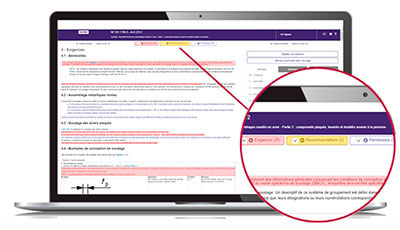
ZOOM ON ... the Requirements department

To comply with a standard, you need to quickly understand its issues in order to determine its impact on your activity.

The Requirements department helps you quickly locate within the normative text:

  • mandatory clauses to satisfy,
  • non-essential but useful clauses to know, such as permissions and recommendations.

The identification of these types of clauses is based on the document "ISO/IEC Directives, Part 2 - Principles and rules of structure and drafting of ISO documents" as well as on a constantly enriched list of verbal forms.

With Requirements, quickly access the main part of the normative text!


Need to identify, monitor and decipher standards?