ISO 10993-7:2026
Biological evaluation of medical devices — Part 7: Ethylene oxide sterilization residuals
This document specifies allowable limits (AL) for residual ethylene oxide (EO) and ethylene chlorohydrin (ECH) in EO-sterilized medical devices, procedures for the measurement of EO and ECH, and methods for determining conformity so that devices can be released. Additional background, including guidance and a flowchart showing how this document is applied, are also included in Annexes A, B, C, D, E, F, G, H, I, J and K.EO-sterilized devices or components that have neither direct nor indirect body or user contact (e.g. in vitro diagnostic devices) are out of scope of this document. This document does not apply to devices that have been demonstrated to not absorb or retain EO or its degradation product ECH, such as medical devices made exclusively of metal alloys and glass, see Clause C.5[228].NOTE This document does not specify limits for ethylene glycol (EG). No device limits are specified for EG because the risk assessment in Annex F indicates that calculated allowable levels are higher than those likely to occur in a medical device.

This document specifies allowable limits (AL) for residual ethylene oxide (EO) and ethylene chlorohydrin (ECH) in EO-sterilized medical devices, procedures for the measurement of EO and ECH, and methods for determining conformity so that devices can be released. Additional background, including guidance and a flowchart showing how this document is applied, are also included in Annexes A, B, C, D, E, F, G, H, I, J and K.
EO-sterilized devices or components that have neither direct nor indirect body or user contact (e.g. in vitro diagnostic devices) are out of scope of this document. This document does not apply to devices that have been demonstrated to not absorb or retain EO or its degradation product ECH, such as medical devices made exclusively of metal alloys and glass, see Clause C.5[228].
NOTE This document does not specify limits for ethylene glycol (EG). No device limits are specified for EG because the risk assessment in Annex F indicates that calculated allowable levels are higher than those likely to occur in a medical device.

ISO 10993-7:2008 specifies allowable limits for residual ethylene oxide (EO) and ethylene chlorohydrin (ECH) in individual EO-sterilized medical devices, procedures for the measurement of EO and ECH, and methods for determining compliance so that devices may be released. Additional background, including guidance and a flowchart showing how the standard is applied are also included in informative annexes. EO-sterilized devices that have no patient contact (e.g., in vitro diagnostic devices) are not covered by ISO 10993-7:2008.
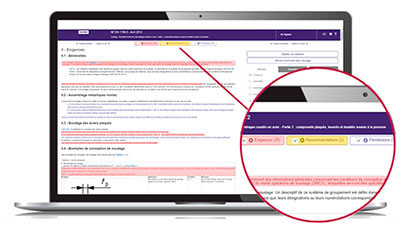
The Requirements department helps you quickly locate within the normative text:
- mandatory clauses to satisfy,
- non-essential but useful clauses to know, such as permissions and recommendations.
The identification of these types of clauses is based on the document “ISO / IEC Directives, Part 2 - Principles and rules of structure and drafting of ISO documents ”as well as on a constantly enriched list of verbal forms.
With Requirements, quickly access the main part of the normative text!

COBAZ is the simple and effective solution to meet the normative needs related to your activity, in France and abroad.
Available by subscription, CObaz is THE modular solution to compose according to your needs today and tomorrow. Quickly discover CObaz!
Request your free, no-obligation live demo
I discover COBAZ