ISO 11300-2:2026
Piping systems for rehabilitation of underground drains, sewers and water supply networks — Part 2: Thermoset composite materials
This document specifies requirements and test methods for pipes and fittings which are part of piping systems for the rehabilitation of underground non-pressure and pressure drains and sewers, and of water supply networks which transport water intended for human consumption, including raw water intake pipelines.This document is applicable to the renovation technique family "lining with cured-in-place pipes (CIPP)". It is not applicable to lining with discrete pipes or lining with pipe segments using glass-reinforced thermosetting plastics (GRP) material, as defined by ISO 11295.It is not applicable to short lengths of CIPP used for patch repair only of local pipe defects.It applies to the use of thermoset composite materials with various thermosetting resin systems, in combination with compatible fibrous carrier materials, reinforcement, and thermoplastics membranes (see 5.1).It is applicable to pipes and fittings, as manufactured, as well as to the installed system. It applies for service temperatures up to 50 °C for drains and sewers and up to 25 °C for water supply networks.For pressurised networks, this document applies to independent (fully structural, class A) and interactive (semi structural, class B) pressure pipe liners, as defined in ISO 11295, which do not rely on adhesion to the existing pipeline.It does not include requirements or test methods for resistance to abrasion, jetting, cyclic loading or impact, which are outside the scope of this document.

This document specifies requirements and test methods for pipes and fittings which are part of piping systems for the rehabilitation of underground non-pressure and pressure drains and sewers, and of water supply networks which transport water intended for human consumption, including raw water intake pipelines.
This document is applicable to the renovation technique family "lining with cured-in-place pipes (CIPP)". It is not applicable to lining with discrete pipes or lining with pipe segments using glass-reinforced thermosetting plastics (GRP) material, as defined by ISO 11295.
It is not applicable to short lengths of CIPP used for patch repair only of local pipe defects.
It applies to the use of thermoset composite materials with various thermosetting resin systems, in combination with compatible fibrous carrier materials, reinforcement, and thermoplastics membranes (see 5.1).
It is applicable to pipes and fittings, as manufactured, as well as to the installed system. It applies for service temperatures up to 50 °C for drains and sewers and up to 25 °C for water supply networks.
For pressurised networks, this document applies to independent (fully structural, class A) and interactive (semi structural, class B) pressure pipe liners, as defined in ISO 11295, which do not rely on adhesion to the existing pipeline.
It does not include requirements or test methods for resistance to abrasion, jetting, cyclic loading or impact, which are outside the scope of this document.

ISO 11296-4:2018, in conjunction with ISO 11296‑1, specifies requirements and test methods for cured-in-place pipes and fittings used for the renovation of underground non-pressure drainage and sewerage networks with service temperatures up to 50 °C. ISO 11296-4:2018 applies to the use of various thermosetting resin systems, in combination with compatible fibrous carrier materials, reinforcement, and other process-related plastics components (see 5.3).
ISO 11297-1:2018 specifies the requirements and test methods for plastics piping systems intended to be used for the renovation of underground drainage and sewerage networks under pressure, including both hydraulically and pneumatically pressurized systems. It is applicable to pipes and fittings, as manufactured, as well as to the installed lining system. It is not applicable to the existing pipeline or any non-structural sprayed coatings or annular filler. ISO 11297-1:2018 gives the general requirements co
ISO 11296-1:2018 specifies the requirements and test methods for plastics piping systems intended to be used for the renovation of underground non-pressure drainage and sewerage networks, which are operated as gravity systems and subjected to a maximum surcharge pressure of 0,5 bar[1]. It is applicable to pipes and fittings, as manufactured, as well as to the installed lining system. It is not applicable to the existing pipeline or any non-structural sprayed coatings or annular filler. ISO 11296-1:2018 gives the general requirements common to all relevant renovation techniques. [1] 1 bar = 0,1 MPa = 0,1 N/mm2 = 105 N/m2.
This document, in conjunction with ISO 11298‑1, specifies requirements and test methods for cured-in-place pipes and fittings used for the renovation of water supply networks, which transport water intended for human consumption, including raw water intake pipelines. It applies to independent (fully structural, class A) and interactive (semi structural, class B) pressure pipe liners, as defined in ISO 11295, which do not rely on adhesion to the existing pipeline. It applies to the use of various thermosetting resin systems, in combination with compatible fibrous carrier materials, reinforcement, and other process-related plastics components (see 5.1). It does not include requirements or test methods for resistance to cyclic loading or the pressure rating of CIPP liners where passing through bends, which are outside the scope of this document. It is applicable to cured-in-place pipe lining systems intended to be used at a service temperature of up to 25 °C. NOTE For applications operating at service temperatures greater than 25 °C, guidance on re-rating factors can be supplied by the system supplier.
ISO 11297-4:2018, in conjunction with ISO 11297‑1 and ISO 11296‑4, specifies requirements and test methods for cured-in-place pipes and fittings used for the renovation of hydraulically and pneumatically pressurized underground drainage and sewerage networks with service temperatures up to 50 °C. ISO 11297-4:2018 applies to independent (fully structural, class A) and interactive (semi structural, class B) pressure pipe liners, as defined in ISO 11295, which do not rely on adhesion to the existing pipeline. ISO 11297-4:2018 applies to the use of various thermosetting resin systems, in combination with compatible fibrous carrier materials, reinforcement, and other process-related plastics components (see 5.1). ISO 11297-4:2018 does not include requirements or test methods for resistance to abrasion, cyclic loading or impact, which are outside the scope of this document.
ISO 11298-1:2018 specifies the requirements and test methods for plastics piping systems intended to be used for the renovation of underground water supply networks. It is applicable to pipes and fittings, as manufactured, as well as to the installed lining system. It is not applicable to the existing pipeline or any non-structural sprayed coatings or annular filler. ISO 11298-1:2018 gives the general requirements common to all relevant renovation techniques.
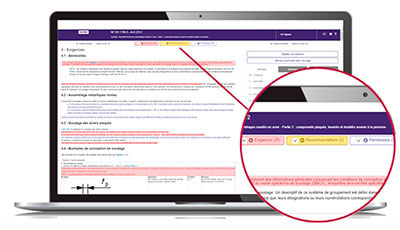
To comply with a standard, you need to quickly understand its issues in order to determine its impact on your activity.
The Requirements department helps you quickly locate within the normative text:
- mandatory clauses to satisfy,
- non-essential but useful clauses to know, such as permissions and recommendations.
The identification of these types of clauses is based on the document "ISO/IEC Directives, Part 2 - Principles and rules of structure and drafting of ISO documents" as well as on a constantly enriched list of verbal forms.
With Requirements, quickly access the main part of the normative text!

COBAZ is the simple and effective solution to meet the normative needs related to your activity, in France and abroad.
Available by subscription, CObaz is THE modular solution to compose according to your needs today and tomorrow. Quickly discover CObaz!
Request your free, no-obligation live demo
I discover COBAZ