ISO 14227:2001
ISO 14227:2001

ISO 14227:2001

December 2001
International standard Current

Small craft - Magnetic compasses

This International Standard specifies the general requirements for the construction as well as the performance oftype tests of magnetic compasses on board small craft of hull length up to 24 m. It refers to liquid magneticcompasses, which can be inspected (e.g. not sealed), either equipped with a direct reading system, or of thereflecting/projecting type.This International Standard also covers magnetic compasses (3.1) not supported on gimbals. The requirementsrelating to gimbals do not refer to such magnetic compasses.This International Standard does not cover dry card compasses, or types of compasses designed on principles different from those stated above or not complying with thedescription given in this clause (e.g. transmitting compasses).

View the extract
Main informations

Collections

International ISO standards

Publication date

December 2001

Number of pages

8 p.

Reference

ISO 14227:2001

ICS Codes

47.080   Small craft

Print number

1 - janvier 2002
Sumary
Small craft - Magnetic compasses

This International Standard specifies the general requirements for the construction as well as the performance of

type tests of magnetic compasses on board small craft of hull length up to 24 m. It refers to liquid magnetic

compasses, which can be inspected (e.g. not sealed), either equipped with a direct reading system, or of the

reflecting/projecting type.

This International Standard also covers magnetic compasses (3.1) not supported on gimbals. The requirements

relating to gimbals do not refer to such magnetic compasses.

This International Standard does not cover

 dry card compasses, or

 types of compasses designed on principles different from those stated above or not complying with the

description given in this clause (e.g. transmitting compasses).

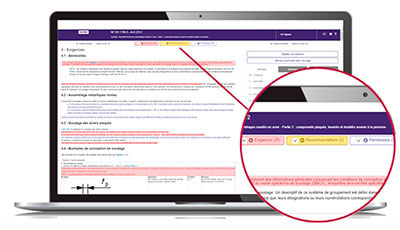
ZOOM ON ... the Requirements department

To comply with a standard, you need to quickly understand its issues in order to determine its impact on your activity.

The Requirements department helps you quickly locate within the normative text:

  • mandatory clauses to satisfy,
  • non-essential but useful clauses to know, such as permissions and recommendations.

The identification of these types of clauses is based on the document "ISO/IEC Directives, Part 2 - Principles and rules of structure and drafting of ISO documents" as well as on a constantly enriched list of verbal forms.

With Requirements, quickly access the main part of the normative text!


Need to identify, monitor and decipher standards?