ISO 14373:2024
ISO 14373:2024

ISO 14373:2024

January 2024
International standard Current

Resistance welding - Procedure for spot welding of uncoated and coated low-carbon steels

This document specifies requirements for resistance spot welding in the fabrication of assemblies of uncoated and metallic-coated or weldable non-metallic-coated low-carbon steel, comprising two or three sheets of metal, where the maximum single-sheet thickness of components to be welded is within the range 0,4 mm to 3,0 mm.This document is applicable to welding of sheets of the same or unequal thickness, where the thickness ratio is less than or equal to 3:1.Welding with the following types of equipment is within the scope of this document:a)       pedestal welding equipment;b)       portable welding guns;c)        automatic welding equipment where the components are fed by robots or automatic feeding equipment;d)       multi-spot-welding machines;e)       robotic welding machines.

View the extract
Main informations

Collections

International ISO standards

Publication date

January 2024

Number of pages

14 p.

Reference

ISO 14373:2024

ICS Codes

25.160.10   Welding processes

Print number

1
Sumary
Resistance welding - Procedure for spot welding of uncoated and coated low-carbon steels

This document specifies requirements for resistance spot welding in the fabrication of assemblies of uncoated and metallic-coated or weldable non-metallic-coated low-carbon steel, comprising two or three sheets of metal, where the maximum single-sheet thickness of components to be welded is within the range 0,4 mm to 3,0 mm.

This document is applicable to welding of sheets of the same or unequal thickness, where the thickness ratio is less than or equal to 3:1.

Welding with the following types of equipment is within the scope of this document:

a)       pedestal welding equipment;

b)       portable welding guns;

c)        automatic welding equipment where the components are fed by robots or automatic feeding equipment;

d)       multi-spot-welding machines;

e)       robotic welding machines.

Replaced standards (1)
ISO 14373:2015
ISO 14373:2015
March 2015
International standard Current
Resistance welding - Procedure for spot welding of uncoated and coated low carbon steels

ISO 14373:2015 specifies requirements for resistance spot welding in the fabrication of assemblies of uncoated and metallic coated low carbon steel, comprising two or three sheets of metal, where the maximum single sheet thickness of components to be welded is within the range 0,4 mm to 3 mm, for the following materials: uncoated steels; hot-dip zinc or iron-zinc alloy (galvannealed) coated steel; electrolytic zinc, zinc-iron, or zinc-nickel coated steel; aluminium coated steel; zinc-aluminium coated steel. It is applicable to welding of sheets of the same or dissimilar thickness, where the thickness ratio is less than or equal to 3:1. It applies to the welding of three thicknesses, where the total thickness is less than or equal to 9 mm. Welding with the following types of equipment is within its scope: pedestal welding equipment; gun welders; automatic welding equipment where the components are fed by robots or automatic feeding equipment; multi welders; robotic welders. It also gives information, for guidance only, on appropriate welding equipment on spot welding conditions. The welding of organic coated or primer coated steels is not within its scope.

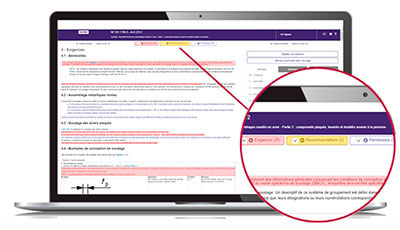
ZOOM ON ... the Requirements department

To comply with a standard, you need to quickly understand its issues in order to determine its impact on your activity.

The Requirements department helps you quickly locate within the normative text:

  • mandatory clauses to satisfy,
  • non-essential but useful clauses to know, such as permissions and recommendations.

The identification of these types of clauses is based on the document "ISO/IEC Directives, Part 2 - Principles and rules of structure and drafting of ISO documents" as well as on a constantly enriched list of verbal forms.

With Requirements, quickly access the main part of the normative text!


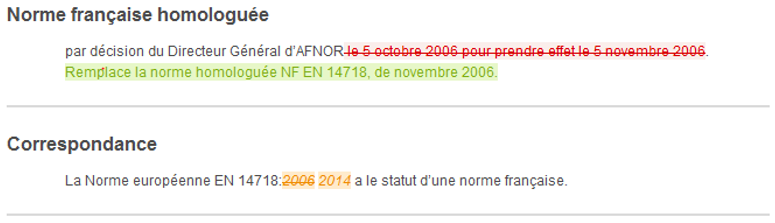
What is the Redline format?
Need to identify, monitor and decipher standards?