ISO 14855-2:2026
ISO 14855-2:2026

ISO 14855-2:2026

September 2026
International standard Current

Determination of the ultimate aerobic biodegradability of plastic materials under controlled composting conditions — Method by analysis of evolved carbon dioxide — Part 2: Gravimetric measurement of carbon dioxide evolved in a laboratory-scale test

This document specifies a method for determining the ultimate aerobic biodegradability of plastic materials under controlled composting conditions by gravimetric measurement of the amount of carbon dioxide evolved. The method is designed to yield an optimum rate of biodegradation by adjusting the humidity, aeration and temperature of the composting vessel.The method applies to the following materials:natural and/or synthetic polymers and copolymers, and mixtures of these;plastic materials that contain additives such as plasticizers or colorants;water-soluble polymers;materials that, under the test conditions, do not inhibit the activity of microorganisms present in the inoculum.NOTE            If the test material inhibits microorganisms in the inoculum, another type of mature compost or pre-exposure compost can be used.


View the extract
Main informations

Collections

International ISO standards

Publication date

September 2026

Number of pages

22 p.

Reference

ISO 14855-2:2026

ICS Codes

83.080.01   Plastics in general

Print number

3
Sumary
Determination of the ultimate aerobic biodegradability of plastic materials under controlled composting conditions — Method by analysis of evolved carbon dioxide — Part 2: Gravimetric measurement of carbon dioxide evolved in a laboratory-scale test

This document specifies a method for determining the ultimate aerobic biodegradability of plastic materials under controlled composting conditions by gravimetric measurement of the amount of carbon dioxide evolved. The method is designed to yield an optimum rate of biodegradation by adjusting the humidity, aeration and temperature of the composting vessel.

The method applies to the following materials:

  • natural and/or synthetic polymers and copolymers, and mixtures of these;
  • plastic materials that contain additives such as plasticizers or colorants;
  • water-soluble polymers;
  • materials that, under the test conditions, do not inhibit the activity of microorganisms present in the inoculum.

NOTE            If the test material inhibits microorganisms in the inoculum, another type of mature compost or pre-exposure compost can be used.
Replaced standards (1)
ISO 14855-2:2018
ISO 14855-2:2018
July 2018
International standard Current
Determination of the ultimate aerobic biodegradability of plastic materials under controlled composting conditions — Method by analysis of evolved carbon dioxide — Part 2: Gravimetric measurement of carbon dioxide evolved in a laboratory-scale test

This document specifies a method for determining the ultimate aerobic biodegradability of plastic materials under controlled composting conditions by gravimetric measurement of the amount of carbon dioxide evolved. The method is designed to yield an optimum rate of biodegradation by adjusting the humidity, aeration and temperature of the composting vessel. The method applies to the following materials: — natural and/or synthetic polymers and copolymers, and mixtures of these; — plastic materials that contain additives such as plasticizers or colorants; — water-soluble polymers; — materials that, under the test conditions, do not inhibit the activity of microorganisms present in the inoculum. If the test material inhibits microorganisms in the inoculum, another type of mature compost or pre-exposure compost can be used.
ZOOM ON ... the Requirements department

To comply with a standard, you need to quickly understand its issues in order to determine its impact on your activity.

The Requirements department helps you quickly locate within the normative text:

  • mandatory clauses to satisfy,
  • non-essential but useful clauses to know, such as permissions and recommendations.

The identification of these types of clauses is based on the document "ISO/IEC Directives, Part 2 - Principles and rules of structure and drafting of ISO documents" as well as on a constantly enriched list of verbal forms.

With Requirements, quickly access the main part of the normative text!


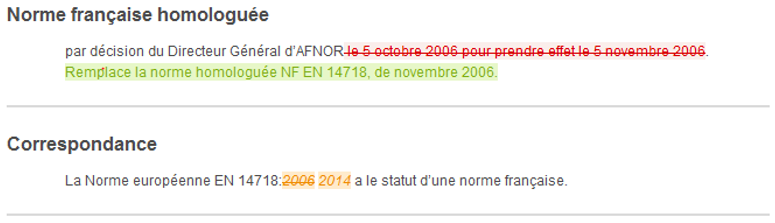
What is the Redline format?
Need to identify, monitor and decipher standards?