ISO 16992:2018
Passenger car tyres - Spare unit substitutive equipment (SUSE)
This document describes spare unit substitutive equipment (SUSE) for passenger car tyres, which is designed to enable users to continue their journey (with or without a stop) in a reasonably safe manner.NOTE 1 Certain equipment becomes effective automatically, thus avoiding the need to stop the vehicle immediately for inspection and corrective action.This document is intended only to qualify the performance of SUSE systems. Its specifications only apply to SUSE systems that can permit the extended mobility of the vehicle.NOTE 2 Other types of SUSE are described in Annexes A and B.The specifications in this document apply from the moment the SUSE system becomes effective, with the driver continuing to control the vehicle (in terms of speed and direction) in an attempt to reach an appropriate place for servicing.The following are within the scope of this document:— the description of the various types of SUSE;— the description and performance levels of complete SUSE systems.NOTE 3 The performance level that the user reasonably has the right to expect, as well as the restrictive conditions placed upon that level, can vary to a large degree depending on the equipment installed and on the real operating conditions of the tyre in flat-tyre running mode.The following are outside the scope of this document:— the vehicle to be equipped;— the tyre while operating in inflated mode;— the characteristics of the pressure survey device and of the warning function relative to the inflated mode or to the partially deflated mode due to slow pressure losses;— the transitory phase, if any, before the equipment becomes effective;— the inspection, assessment, and the servicing of the SUSE system, after it has been activated in flat tyre running mode.
This document describes spare unit substitutive equipment (SUSE) for passenger car tyres, which is designed to enable users to continue their journey (with or without a stop) in a reasonably safe manner.
NOTE 1 Certain equipment becomes effective automatically, thus avoiding the need to stop the vehicle immediately for inspection and corrective action.
This document is intended only to qualify the performance of SUSE systems. Its specifications only apply to SUSE systems that can permit the extended mobility of the vehicle.
NOTE 2 Other types of SUSE are described in Annexes A and B.
The specifications in this document apply from the moment the SUSE system becomes effective, with the driver continuing to control the vehicle (in terms of speed and direction) in an attempt to reach an appropriate place for servicing.
The following are within the scope of this document:
— the description of the various types of SUSE;
— the description and performance levels of complete SUSE systems.
NOTE 3 The performance level that the user reasonably has the right to expect, as well as the restrictive conditions placed upon that level, can vary to a large degree depending on the equipment installed and on the real operating conditions of the tyre in flat-tyre running mode.
The following are outside the scope of this document:
— the vehicle to be equipped;
— the tyre while operating in inflated mode;
— the characteristics of the pressure survey device and of the warning function relative to the inflated mode or to the partially deflated mode due to slow pressure losses;
— the transitory phase, if any, before the equipment becomes effective;
— the inspection, assessment, and the servicing of the SUSE system, after it has been activated in flat tyre running mode.
ISO 16992:2010 describes spare unit substitutive equipment (SUSE) for passenger car tyres, which is designed to enable users to continue their journey (with or without a stop) in a reasonably safe manner. ISO 16992:2010 is intended only to qualify the performance of extended mobility systems. Its specifications only apply to extended mobility systems that can permit the extended mobility of the vehicle. The specifications in ISO 16992:2010 apply from the moment the extended mobility system becomes effective, with the driver continuing to control of the vehicle (in terms of speed and direction) in an attempt to reach an appropriate place for servicing. The following are within the scope of ISO 16992:2010: the description of the various types of SUSE; the description and performance levels of complete extended mobility systems. The following are outside the scope of ISO 16992:2010: the vehicle to be equipped; the tyre while operating in inflated mode; the characteristics of the pressure survey device and of the warning function relative to the inflated mode or to the partially deflated mode due to slow pressure losses; the transitory phase, if any, before the equipment becomes effective; the inspection, assessment, and the servicing of the extended mobility system, after it has been activated in flat tyre running mode.
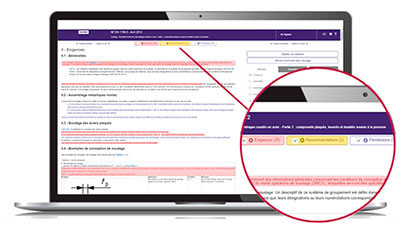
The Requirements department helps you quickly locate within the normative text:
- mandatory clauses to satisfy,
- non-essential but useful clauses to know, such as permissions and recommendations.
The identification of these types of clauses is based on the document “ISO / IEC Directives, Part 2 - Principles and rules of structure and drafting of ISO documents ”as well as on a constantly enriched list of verbal forms.
With Requirements, quickly access the main part of the normative text!

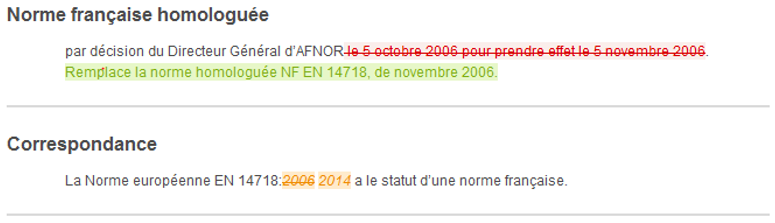
At a glance, you will be able to identify the additions, deletions or modifications to a text, table, figure and formula.

The Redlines + service is offered to you on the collection of French standards in force, in French language and in HTML and PDF format.
For an overview of the service, click on View a standard in redline format
COBAZ is the simple and effective solution to meet the normative needs related to your activity, in France and abroad.
Available by subscription, CObaz is THE modular solution to compose according to your needs today and tomorrow. Quickly discover CObaz!
Request your free, no-obligation live demo
I discover COBAZ