
ISO 17357-1:2014
ISO 17357-1:2014

ISO 17357-1:2014

January 2014
International standard Current

Ships and marine technology - Floating pneumatic rubber fenders - Part 1 : high pressure

ISO 17357-1:2014 specifies the material, performance, and dimensions of high-pressure floating pneumatic rubber fenders, which are intended to be used for the berthing and mooring of a ship to another ship or berthing structure. It also specifies the test and inspection procedures for high-pressure floating pneumatic rubber fenders.ISO 17357-1:2014 does not address any safety hazards associated with its use.

View the extract
Main informations

Collections

International ISO standards

Publication date

January 2014

Number of pages

20 p.

Reference

ISO 17357-1:2014

ICS Codes

47.020.99   Other standards related to shipbuilding and marine structures
83.140.99   Other rubber and plastics products

Print number

1
Sumary
Ships and marine technology - Floating pneumatic rubber fenders - Part 1 : high pressure

ISO 17357-1:2014 specifies the material, performance, and dimensions of high-pressure floating pneumatic rubber fenders, which are intended to be used for the berthing and mooring of a ship to another ship or berthing structure. It also specifies the test and inspection procedures for high-pressure floating pneumatic rubber fenders.

ISO 17357-1:2014 does not address any safety hazards associated with its use.

Replaced standards (1)
ISO 17357:2002
ISO 17357:2002
November 2002
International standard Cancelled
Ships and marine technology - High-pressure floating pneumatic rubber fenders

ISO 17357:2002 specifies the material, performance and dimensions of high-pressure floating pneumatic rubber fenders, which are intended to be used for the berthing and mooring of a ship to another ship or berthing structure. It also specifies the test and inspection procedures for high-pressure floating pneumatic rubber fenders. ISO 17357:2002 does not address any safety hazards associated with its use. It is the user's responsibility to establish appropriate safety and health practices and determine the applicability of regulatory limitations before using this standard.

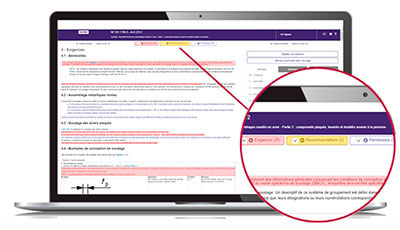
ZOOM ON ... the Requirements department

To comply with a standard, you need to quickly understand its issues in order to determine its impact on your activity.

The Requirements department helps you quickly locate within the normative text:

  • mandatory clauses to satisfy,
  • non-essential but useful clauses to know, such as permissions and recommendations.

The identification of these types of clauses is based on the document "ISO/IEC Directives, Part 2 - Principles and rules of structure and drafting of ISO documents" as well as on a constantly enriched list of verbal forms.

With Requirements, quickly access the main part of the normative text!


What is the Redline format?
Need to identify, monitor and decipher standards?