ISO 17892-1:2014
ISO 17892-1:2014

ISO 17892-1:2014

December 2014
International standard Current

Geotechnical investigation and testing - Laboratory testing of soil - Part 1 : determination of water content

ISO 17892-1:2014 specifies a method of determining the water content of soils.It is applicable to the laboratory determination of the water (also known as moisture) content of a soil test specimen by oven-drying within the scope of geotechnical investigations. The water content is required as a guide to the classification of natural soils and as a control criterion in re-compacted soils, and is measured on samples used for most field and laboratory tests. The oven-drying method is the definitive procedure used in usual laboratory practice.The practical procedure for determining the water content of a soil is to determine the mass loss on drying the test specimen to a constant mass in a drying oven controlled at a given temperature. The mass loss is assumed to be due to free water and is referenced to the remaining dry mass of solid particles.


View the extract
Main informations

Collections

International ISO standards

Publication date

December 2014

Number of pages

10 p.

Reference

ISO 17892-1:2014

ICS Codes

13.080.20   Physical properties of soils
93.020   Earthworks. Excavations. Foundation construction. Underground works

Print number

1
Sumary
Geotechnical investigation and testing - Laboratory testing of soil - Part 1 : determination of water content

ISO 17892-1:2014 specifies a method of determining the water content of soils.

It is applicable to the laboratory determination of the water (also known as moisture) content of a soil test specimen by oven-drying within the scope of geotechnical investigations. The water content is required as a guide to the classification of natural soils and as a control criterion in re-compacted soils, and is measured on samples used for most field and laboratory tests. The oven-drying method is the definitive procedure used in usual laboratory practice.

The practical procedure for determining the water content of a soil is to determine the mass loss on drying the test specimen to a constant mass in a drying oven controlled at a given temperature. The mass loss is assumed to be due to free water and is referenced to the remaining dry mass of solid particles.
Replaced standards (2)
ISO/TS 17892-1:2004
ISO/TS 17892-1:2004
October 2004
Technical specification Cancelled
Geotechnical investigation and testing - Laboratory testing of soil - Part 1 : determination of water content

ISO/TS 17892-1:2004 specifies the laboratory determination of the water (moisture) content of a soil test specimen by oven-drying within the scope of the geotechnical investigations according to prEN 1997-1 and prEN 1997-2. The water content is required as a guide to classification of natural soils and as a control criterion in re-compacted soils and is measured on samples used for most field and laboratory tests. The oven-drying method is the definitive procedure used in usual laboratory practice. The practical procedure for determining the water content of a soil is to determine the mass of water removed by drying the moist soil (test specimen) to a constant mass in a drying oven controlled at a given temperature, and to use this value as the mass of water in the test specimen related to the mass of solid particles. The mass of soil remaining after oven-drying is used as the mass of the solid particles.

ISO/TS 17892-1/AC1:2006
January 2006
Technical specification Cancelled
Technical corrigendum 1 to standard ISO/TS 17892-1:2004

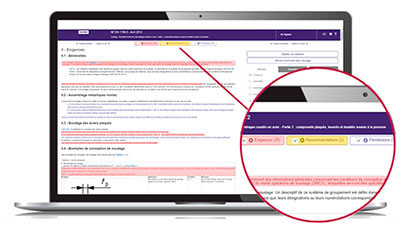
ZOOM ON ... the Requirements department

To comply with a standard, you need to quickly understand its issues in order to determine its impact on your activity.

The Requirements department helps you quickly locate within the normative text:

  • mandatory clauses to satisfy,
  • non-essential but useful clauses to know, such as permissions and recommendations.

The identification of these types of clauses is based on the document "ISO/IEC Directives, Part 2 - Principles and rules of structure and drafting of ISO documents" as well as on a constantly enriched list of verbal forms.

With Requirements, quickly access the main part of the normative text!


What is the Redline format?
Need to identify, monitor and decipher standards?