ISO 18227:2025
ISO 18227:2025

ISO 18227:2025

December 2025
International standard Current

Environmental solid matrices - Determination of elemental composition by X-ray fluorescence spectrometry

This document specifies the procedure for a quantitative determination of major and trace element concentrations in homogeneous solid waste, soil, soil-like material and sludge by energy dispersive X-ray fluorescence (EDXRF) spectrometry or wavelength dispersive X-ray fluorescence (WDXRF) spectrometry using a calibration with matrix-matched standards.This document is applicable for the following elements: Na, Mg, Al, Si, P, S, Cl, K, Ca, Ti, V, Cr, Mn, Fe, Co, Ni, Cu, Zn, As, Se, Br, Rb, Sr, Y, Zr, Nb, Mo, Ag, Cd, Sn, Sb, Te, I, Cs, Ba, Ta, W, Hg, Tl, Pb, Bi, Th and U. Concentration levels between a mass fraction of approximately 0,000 1 % and 100 % can be determined depending on the element and the instrument used.An optional XRF screening method for solid and liquid material as waste, sludge and soil is added in Annex A which provides a total element characterization at a semi-quantitative level, where the calibration is based on matrix-independent calibration curves, previously set up by the manufacturer.

View the extract
Main informations

Collections

International ISO standards

Publication date

December 2025

Number of pages

38 p.

Reference

ISO 18227:2025

ICS Codes

13.080.10   Chemical characteristics of soils

Print number

1
Sumary
Environmental solid matrices - Determination of elemental composition by X-ray fluorescence spectrometry

This document specifies the procedure for a quantitative determination of major and trace element concentrations in homogeneous solid waste, soil, soil-like material and sludge by energy dispersive X-ray fluorescence (EDXRF) spectrometry or wavelength dispersive X-ray fluorescence (WDXRF) spectrometry using a calibration with matrix-matched standards.

This document is applicable for the following elements: Na, Mg, Al, Si, P, S, Cl, K, Ca, Ti, V, Cr, Mn, Fe, Co, Ni, Cu, Zn, As, Se, Br, Rb, Sr, Y, Zr, Nb, Mo, Ag, Cd, Sn, Sb, Te, I, Cs, Ba, Ta, W, Hg, Tl, Pb, Bi, Th and U. Concentration levels between a mass fraction of approximately 0,000 1 % and 100 % can be determined depending on the element and the instrument used.

An optional XRF screening method for solid and liquid material as waste, sludge and soil is added in Annex A which provides a total element characterization at a semi-quantitative level, where the calibration is based on matrix-independent calibration curves, previously set up by the manufacturer.
Replaced standards (1)
ISO 18227:2014
ISO 18227:2014
March 2014
International standard Cancelled
Soil quality - Determination of elemental composition by X-ray fluorescence

ISO 18227:2014 specifies the procedure for a quantitative determination of major and trace element concentrations in homogeneous solid waste, soil, and soil-like material by energy dispersive X-ray fluorescence (EDXRF) spectrometry or wavelength dispersive X-ray fluorescence (WDXRF) spectrometry using a calibration with matrix-matched standards. ISO 18227:2014 is applicable for the following elements: Na, Mg, Al, Si, P, S, Cl, K, Ca, Ti, V, Cr, Mn, Fe, Co, Ni, Cu, Zn, As, Se, Br, Rb, Sr, Y, Zr, Nb, Mo, Ag, Cd, Sn, Sb, Te, I, Cs, Ba, Ta, W, Hg, Tl, Pb, Bi, Th, and U. Concentration levels between approximately 0,000 1 % and 100 % can be determined depending on the element and the instrument used.

ZOOM ON ... the Requirements department

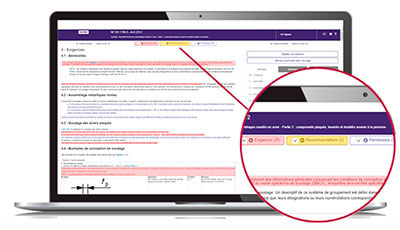
To comply with a standard, you need to quickly understand its issues in order to determine its impact on your activity.

The Requirements department helps you quickly locate within the normative text:

  • mandatory clauses to satisfy,
  • non-essential but useful clauses to know, such as permissions and recommendations.

The identification of these types of clauses is based on the document "ISO/IEC Directives, Part 2 - Principles and rules of structure and drafting of ISO documents" as well as on a constantly enriched list of verbal forms.

With Requirements, quickly access the main part of the normative text!


What is the Redline format?
Need to identify, monitor and decipher standards?