ISO 20418-3:2020
ISO 20418-3:2020

ISO 20418-3:2020

June 2020
International standard Current

Textiles - Qualitative and quantitative proteomic analysis of some animal hair fibres - Part 3: Peptide detection using LC-MS without protein reduction

This document specifies a qualitative and quantitative procedure to determine the composition of animal hair fibre blends (made of wool, cashmere, yak, alpaca, camel or angora) by LC-MS without protein reduction.NOTE 1 The composition of non-animal hair fibres can be measured by ISO 1833 (all parts). Both results are combined to determine the total fibre composition.The method is based on a preliminary identification, by light microscopy, of all fibres in the blend on the basis of their morphology, according to ISO/TR 11827[4]. It is not applicable if fibres of the same animal species (such as blends of cashmere and mohair) are present. NOTE 2 In this case, the quantitative analysis is performed using microscopical analysis [for example, ISO 17751 (all parts)].


View the extract
Main informations

Collections

International ISO standards

Publication date

June 2020

Number of pages

24 p.

Reference

ISO 20418-3:2020

ICS Codes

59.060.01   Textile fibres in general

Print number

1
Sumary
Textiles - Qualitative and quantitative proteomic analysis of some animal hair fibres - Part 3: Peptide detection using LC-MS without protein reduction

This document specifies a qualitative and quantitative procedure to determine the composition of animal hair fibre blends (made of wool, cashmere, yak, alpaca, camel or angora) by LC-MS without protein reduction.

NOTE 1 The composition of non-animal hair fibres can be measured by ISO 1833 (all parts). Both results are combined to determine the total fibre composition.

The method is based on a preliminary identification, by light microscopy, of all fibres in the blend on the basis of their morphology, according to ISO/TR 11827[4]. It is not applicable if fibres of the same animal species (such as blends of cashmere and mohair) are present.

NOTE 2 In this case, the quantitative analysis is performed using microscopical analysis [for example, ISO 17751 (all parts)].
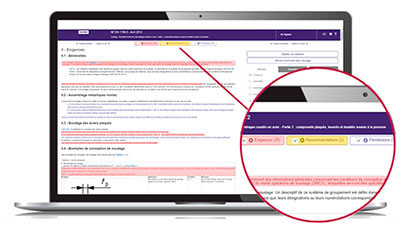
ZOOM ON ... the Requirements department

To comply with a standard, you need to quickly understand its issues in order to determine its impact on your activity.

The Requirements department helps you quickly locate within the normative text:

  • mandatory clauses to satisfy,
  • non-essential but useful clauses to know, such as permissions and recommendations.

The identification of these types of clauses is based on the document "ISO/IEC Directives, Part 2 - Principles and rules of structure and drafting of ISO documents" as well as on a constantly enriched list of verbal forms.

With Requirements, quickly access the main part of the normative text!


Need to identify, monitor and decipher standards?