ISO 5659:2026
ISO 5659:2026

ISO 5659:2026

January 2026
International standard Current

Plastics - Smoke generation - Determination of optical density by a single-chamber test

This document specifies a method of measuring smoke production from the exposed surface of specimens of materials or composites. It is applicable to specimens that have an essentially flat surface and do not exceed 25 mm in thickness when placed in a horizontal orientation and subjected to specified levels of thermal irradiance in a closed cabinet with or without the application of a pilot flame. This method of test is applicable to all plastics.It is intended that the values of optical density determined by this test be taken as specific to the specimen or assembly material in the form and thickness tested and are not to be considered inherent, fundamental properties.The test is intended primarily for use in research and development and fire safety engineering in buildings, trains, ships, etc. and not as a basis for ratings for building codes or other purposes. No basis is provided for predicting the density of smoke that can be generated by the materials upon exposure to heat and flame under other (actual) exposure conditions. This test procedure excludes the effect of irritants on the eye.NOTE            This test procedure addresses the loss of visibility due to smoke density, which generally is not related to irritancy potency (see Annex E).It is emphasized that smoke production from a material varies according to the irradiance level to which the specimen is exposed. The results yielded from the method specified in this document are based on exposure to the specific irradiance levels of 25 kW/m2 and 50 kW/m2.

View the extract
Main informations

Collections

International ISO standards

Publication date

January 2026

Number of pages

50 p.

Reference

ISO 5659:2026

ICS Codes

13.220.40   Ignitability and burning behaviour of materials and products
83.080.01   Plastics in general

Print number

1
Sumary
Plastics - Smoke generation - Determination of optical density by a single-chamber test

This document specifies a method of measuring smoke production from the exposed surface of specimens of materials or composites. It is applicable to specimens that have an essentially flat surface and do not exceed 25 mm in thickness when placed in a horizontal orientation and subjected to specified levels of thermal irradiance in a closed cabinet with or without the application of a pilot flame. This method of test is applicable to all plastics.

It is intended that the values of optical density determined by this test be taken as specific to the specimen or assembly material in the form and thickness tested and are not to be considered inherent, fundamental properties.

The test is intended primarily for use in research and development and fire safety engineering in buildings, trains, ships, etc. and not as a basis for ratings for building codes or other purposes. No basis is provided for predicting the density of smoke that can be generated by the materials upon exposure to heat and flame under other (actual) exposure conditions. This test procedure excludes the effect of irritants on the eye.

NOTE            This test procedure addresses the loss of visibility due to smoke density, which generally is not related to irritancy potency (see Annex E).

It is emphasized that smoke production from a material varies according to the irradiance level to which the specimen is exposed. The results yielded from the method specified in this document are based on exposure to the specific irradiance levels of 25 kW/m2 and 50 kW/m2.

Replaced standards (1)
ISO 5659-2:2017
ISO 5659-2:2017
May 2017
International standard Cancelled
Plastics - Smoke generation - Part 2 : determination of optical density by a single-chamber test

ISO 5659-2:2017 specifies a method of measuring smoke production from the exposed surface of specimens of materials or composites. It is applicable to specimens that have an essentially flat surface and do not exceed 25 mm in thickness when placed in a horizontal orientation and subjected to specified levels of thermal irradiance in a closed cabinet with or without the application of a pilot flame. This method of test is applicable to all plastics. It is intended that the values of optical density determined by this test be taken as specific to the specimen or assembly material in the form and thickness tested and are not to be considered inherent, fundamental properties. The test is intended primarily for use in research and development and fire safety engineering in buildings, trains, ships, etc. and not as a basis for ratings for building codes or other purposes. No basis is provided for predicting the density of smoke that can be generated by the materials upon exposure to heat and flame under other (actual) exposure conditions. This test procedure excludes the effect of irritants on the eye.

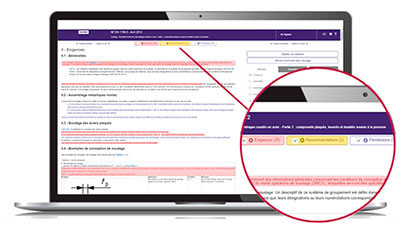
ZOOM ON ... the Requirements department
To comply with a standard, you need to quickly understand its issues in order to determine its impact on your activity.

The Requirements department helps you quickly locate within the normative text:
- mandatory clauses to satisfy,
- non-essential but useful clauses to know, such as permissions and recommendations.

The identification of these types of clauses is based on the document “ISO / IEC Directives, Part 2 - Principles and rules of structure and drafting of ISO documents ”as well as on a constantly enriched list of verbal forms.

With Requirements, quickly access the main part of the normative text!

With Requirements, quickly access the main part of the normative text!
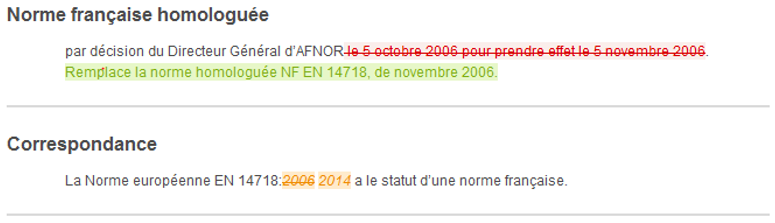
What is the Redline format?
Need to identify, monitor and decipher standards?