

ISO 7206-13:2016
ISO 7206-13:2016

ISO 7206-13:2016

June 2016
International standard Current

Implants for surgery — Partial and total hip joint prostheses — Part 13: Determination of resistance to torque of head fixation of stemmed femoral components

ISO 7206-13:2016 describes a method of determining the torque required, under specified laboratory conditions, to loosen the fixation of the head of hip joint prostheses in which the head is not intended to rotate relative to the neck. It applies to the femoral component of total or partial hip joint replacements in which the head and neck/stem (in the following referred to as cone) are secured together by a locking conical taper or any other means and in which the head and cone are separate components, and which are made of metallic or non-metallic materials.It does not cover methods of examining the test specimens; these should be agreed between the test laboratory and the party submitting the specimen for test.

View the extract
Main informations

Collections

International ISO standards

Publication date

June 2016

Number of pages

6 p.

Reference

ISO 7206-13:2016

ICS Codes

11.040.40   Implants for surgery, prosthetics and orthotics

Print number

1
Sumary
Implants for surgery — Partial and total hip joint prostheses — Part 13: Determination of resistance to torque of head fixation of stemmed femoral components

ISO 7206-13:2016 describes a method of determining the torque required, under specified laboratory conditions, to loosen the fixation of the head of hip joint prostheses in which the head is not intended to rotate relative to the neck. It applies to the femoral component of total or partial hip joint replacements in which the head and neck/stem (in the following referred to as cone) are secured together by a locking conical taper or any other means and in which the head and cone are separate components, and which are made of metallic or non-metallic materials.

It does not cover methods of examining the test specimens; these should be agreed between the test laboratory and the party submitting the specimen for test.

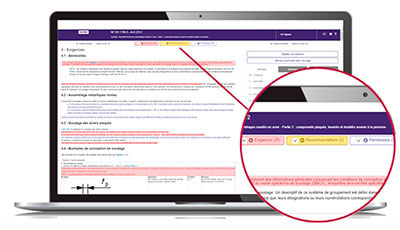
ZOOM ON ... the Requirements department

To comply with a standard, you need to quickly understand its issues in order to determine its impact on your activity.

The Requirements department helps you quickly locate within the normative text:

  • mandatory clauses to satisfy,
  • non-essential but useful clauses to know, such as permissions and recommendations.

The identification of these types of clauses is based on the document "ISO/IEC Directives, Part 2 - Principles and rules of structure and drafting of ISO documents" as well as on a constantly enriched list of verbal forms.

With Requirements, quickly access the main part of the normative text!


Need to identify, monitor and decipher standards?