ISO 7887:2011
ISO 7887:2011

ISO 7887:2011

December 2011
International standard Current

Water quality - Examination and determination of colour

ISO 7887:2011 specifies four different methods, designated A to D, for the examination of colour.The previously most employed method for assessment of water colour in water treatment plants, limnological surveys, etc. was based on the hexachloroplatinate scale. Methods C and D are harmonized with this traditional procedure.Method A involves examination of apparent colour by visually observing a water sample in a bottle. This gives only preliminary information, for example for use in field work. Only the apparent colour can be reported.Method B involves determination of the true colour of a water sample using optical apparatus and is applicable to raw and potable water and to industrial water of low colour. A subclause on interferences is included.Method C involves determination of the true colour of a water sample using optical apparatus for comparison with hexachloroplatinate concentration at wavelength, λ = 410 nm. A subclause on interferences is included.Method D involves determination of colour by visual comparison with hexachloroplatinate standard solutions and can be applied to raw and drinking water. A subclause on interferences is included.Methods A and B are appropriate if the colour hue of the sample differs from the hue of the matching solution.When stating the result, the procedure used (methods A to D) is also recorded.

View the extract
Main informations

Collections

International ISO standards

Publication date

December 2011

Number of pages

15 p.

Reference

ISO 7887:2011

ICS Codes

13.060.60   Examination of physical properties of water

Print number

1 - janvier 2012
Sumary
Water quality - Examination and determination of colour

ISO 7887:2011 specifies four different methods, designated A to D, for the examination of colour.

The previously most employed method for assessment of water colour in water treatment plants, limnological surveys, etc. was based on the hexachloroplatinate scale. Methods C and D are harmonized with this traditional procedure.

Method A involves examination of apparent colour by visually observing a water sample in a bottle. This gives only preliminary information, for example for use in field work. Only the apparent colour can be reported.

Method B involves determination of the true colour of a water sample using optical apparatus and is applicable to raw and potable water and to industrial water of low colour. A subclause on interferences is included.

Method C involves determination of the true colour of a water sample using optical apparatus for comparison with hexachloroplatinate concentration at wavelength, λ = 410 nm. A subclause on interferences is included.

Method D involves determination of colour by visual comparison with hexachloroplatinate standard solutions and can be applied to raw and drinking water. A subclause on interferences is included.

Methods A and B are appropriate if the colour hue of the sample differs from the hue of the matching solution.

When stating the result, the procedure used (methods A to D) is also recorded.

Replaced standards (1)
ISO 7887:1994
ISO 7887:1994
September 1994
International standard Cancelled
Water quality. Examination and determination of colour.

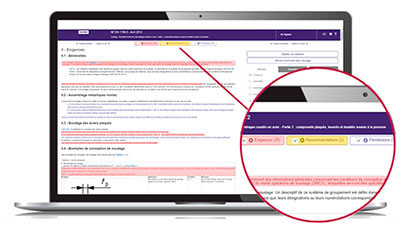
ZOOM ON ... the Requirements department

To comply with a standard, you need to quickly understand its issues in order to determine its impact on your activity.

The Requirements department helps you quickly locate within the normative text:

  • mandatory clauses to satisfy,
  • non-essential but useful clauses to know, such as permissions and recommendations.

The identification of these types of clauses is based on the document "ISO/IEC Directives, Part 2 - Principles and rules of structure and drafting of ISO documents" as well as on a constantly enriched list of verbal forms.

With Requirements, quickly access the main part of the normative text!


Need to identify, monitor and decipher standards?