
ISO 8655-2:2022
ISO 8655-2:2022

ISO 8655-2:2022

April 2022
International standard Current

Piston-operated volumetric apparatus - Part 2: Pipettes

This document specifies—    metrological requirements,—    maximum permissible errors,—    requirements for marking and—    information to be provided for users,for air-displacement (type A) and positive displacement (type D) single-channel and multi-channel pipettes, complete with their selected tip(s) and any other essential, consumable parts, designed to deliver the selected volume (Ex).

View the extract
Main informations

Collections

International ISO standards

Publication date

April 2022

Number of pages

15 p.

Reference

ISO 8655-2:2022

ICS Codes

17.060   Measurement of volume, mass, density, viscosity

Print number

1
Sumary
Piston-operated volumetric apparatus - Part 2: Pipettes

This document specifies

—    metrological requirements,

—    maximum permissible errors,

—    requirements for marking and

—    information to be provided for users,

for air-displacement (type A) and positive displacement (type D) single-channel and multi-channel pipettes, complete with their selected tip(s) and any other essential, consumable parts, designed to deliver the selected volume (Ex).

Replaced standards (2)
ISO 8655-2:2002
ISO 8655-2:2002
September 2002
International standard Cancelled
Piston-operated volumetric apparatus - Part 2 : piston pipettes

ISO 8655-2:2002 specifies metrological requirements, maximum permissible errors, requirements for marking and information to be provided for users, for air-displacement (type A) and positive-displacement (type D) single-channel and multi-channel piston pipettes, complete with their selected tip(s) and any other essential, consumable parts, designed to deliver their specified nominal volume (Ex).

ISO 8655-2/AC1:2008
ISO 8655-2/AC1:2008
December 2008
International standard Cancelled
Technical corrigendum 1 to standard ISO 8655-2:2002

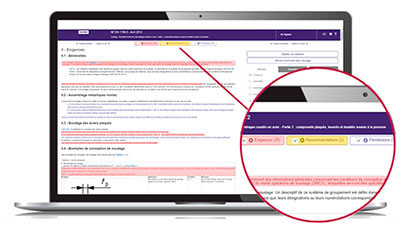
ZOOM ON ... the Requirements department

To comply with a standard, you need to quickly understand its issues in order to determine its impact on your activity.

The Requirements department helps you quickly locate within the normative text:

  • mandatory clauses to satisfy,
  • non-essential but useful clauses to know, such as permissions and recommendations.

The identification of these types of clauses is based on the document "ISO/IEC Directives, Part 2 - Principles and rules of structure and drafting of ISO documents" as well as on a constantly enriched list of verbal forms.

With Requirements, quickly access the main part of the normative text!


What is the Redline format?
Need to identify, monitor and decipher standards?