

ISO 9000:2026
ISO 9000:2026

ISO 9000:2026

May 2026
International standard Current

Quality management — Fundamentals and vocabulary

This document establishes the fundamental concepts and principles of quality management which are universally applicable to the following:organizations seeking sustained success through the implementation of a quality management system (QMS);customers seeking confidence in an organization’s ability to consistently provide products and services conforming to their requirements;organizations seeking confidence in their supply chain that product and service requirements will be met;organizations and interested parties seeking to improve communication through a common understanding of the vocabulary used in quality management;organizations performing conformity assessments against the requirements of ISO 9001;providers of training, assessment or advice in quality management;developers of related standards.This document defines terms that apply to all quality management documents and QMS standards developed by ISO/TC 176.This document is applicable to all organizations, regardless of size, complexity or business model.

View the extract
Main informations

Collections

International ISO standards

Thematics

Management et performance, QSE, Qualité - audit - lean

Publication date

May 2026

Number of pages

56 p.

Reference

ISO 9000:2026

ICS Codes

03.100.70   Management systems
03.120.10   Quality management and quality assurance
01.040.03   Services. Company organization, management and quality. Administration. Transport. Sociology. (Vocabularies)

Print number

5
Sumary
Quality management — Fundamentals and vocabulary

This document establishes the fundamental concepts and principles of quality management which are universally applicable to the following:

  • organizations seeking sustained success through the implementation of a quality management system (QMS);
  • customers seeking confidence in an organization’s ability to consistently provide products and services conforming to their requirements;
  • organizations seeking confidence in their supply chain that product and service requirements will be met;
  • organizations and interested parties seeking to improve communication through a common understanding of the vocabulary used in quality management;
  • organizations performing conformity assessments against the requirements of ISO 9001;
  • providers of training, assessment or advice in quality management;
  • developers of related standards.

This document defines terms that apply to all quality management documents and QMS standards developed by ISO/TC 176.

This document is applicable to all organizations, regardless of size, complexity or business model.

Replaced standards (1)
ISO 9000:2015
ISO 9000:2015
September 2015
International standard Current
Quality management systems - Fundamentals and vocabulary

  ISO 9000:2015 describes the fundamental concepts and principles of quality management which are universally applicable to the following: organizations seeking sustained success through the implementation of a quality management system; customers seeking confidence in an organization's ability to consistently provide products and services conforming to their requirements; organizations seeking confidence in their supply chain that their product and service requirements will be met; organizations and interested parties seeking to improve communication through a common understanding of the vocabulary used in quality management; organizations performing conformity assessments against the requirements of ISO 9001; providers of training, assessment or advice in quality management; developers of related standards. ISO 9000:2015 specifies the terms and definitions that apply to all quality management and quality management system standards developed by ISO/TC 176.

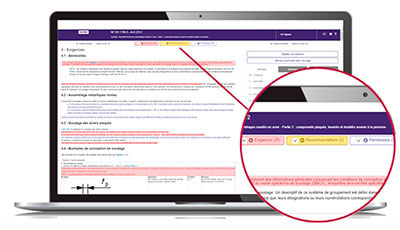
ZOOM ON ... the Requirements department

To comply with a standard, you need to quickly understand its issues in order to determine its impact on your activity.

The Requirements department helps you quickly locate within the normative text:

  • mandatory clauses to satisfy,
  • non-essential but useful clauses to know, such as permissions and recommendations.

The identification of these types of clauses is based on the document "ISO/IEC Directives, Part 2 - Principles and rules of structure and drafting of ISO documents" as well as on a constantly enriched list of verbal forms.

With Requirements, quickly access the main part of the normative text!


Need to identify, monitor and decipher standards?