

ISO 9096:2017
ISO 9096:2017

ISO 9096:2017

September 2017
International standard Current

Stationary source emissions - Manual determination of mass concentration of particulate matter

ISO 9096:2017 describes a reference method for the measurement of particulate matter (dust) concentration in waste gases of concentrations from 20 mg/m3 to 1 000 mg/m3 under standard conditions.ISO 9096:2017 is applicable to the calibration of automated monitoring systems (AMS). If the emission gas contains unstable, reactive or semi-volatile substances, the measurement will depend on the filtration temperature. In-stack methods can be more applicable than out-stack methods for the calibration of automated monitoring systems.

View the extract
Main informations

Collections

International ISO standards

Publication date

September 2017

Number of pages

43 p.

Reference

ISO 9096:2017

ICS Codes

13.040.40   Stationary source emissions

Print number

1
Sumary
Stationary source emissions - Manual determination of mass concentration of particulate matter

ISO 9096:2017 describes a reference method for the measurement of particulate matter (dust) concentration in waste gases of concentrations from 20 mg/m3 to 1 000 mg/m3 under standard conditions.

ISO 9096:2017 is applicable to the calibration of automated monitoring systems (AMS). If the emission gas contains unstable, reactive or semi-volatile substances, the measurement will depend on the filtration temperature. In-stack methods can be more applicable than out-stack methods for the calibration of automated monitoring systems.

Replaced standards (2)
ISO 9096:2003
ISO 9096:2003
February 2003
International standard Cancelled
Stationary source emissions - Manual determination of mass concentration of particulate matter

ISO 9096:2002 describes a reference method for the measurement of particulate matter (dust) concentration in waste gases of concentrations from 20 mg/m3 to 1000 mg/m3 under standard conditions. ISO 9096:2002 is applicable to the calibration of automated monitoring systems (AMS). If the emission gas contains unstable, reactive or semi-volatile substances, the measurement will depend on the filtration temperature. In-stack methods may be more applicable than out-stack methods for the calibration of automated monitoring systems.

ISO 9096/AC1:2006
ISO 9096/AC1:2006
December 2006
International standard Cancelled
Technical corrigendum 1 to standard ISO 9096:2003

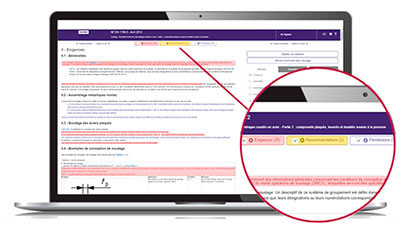
ZOOM ON ... the Requirements department

To comply with a standard, you need to quickly understand its issues in order to determine its impact on your activity.

The Requirements department helps you quickly locate within the normative text:

  • mandatory clauses to satisfy,
  • non-essential but useful clauses to know, such as permissions and recommendations.

The identification of these types of clauses is based on the document "ISO/IEC Directives, Part 2 - Principles and rules of structure and drafting of ISO documents" as well as on a constantly enriched list of verbal forms.

With Requirements, quickly access the main part of the normative text!


Need to identify, monitor and decipher standards?