ISO 9220:2022
ISO 9220:2022

ISO 9220:2022

February 2022
International standard Current

Metallic coatings - Measurement of coating thickness - Scanning electron microscope method

This document specifies a destructive method for the measurement of the local thickness of metallic and other inorganic coatings by examination of cross-sections with a scanning electron microscope (SEM). The method is applicable for thicknesses up to several millimetres, but for such thick coatings it is usually more practical to use a light microscope (see ISO 1463). The lower thickness limit depends on the achieved measurement uncertainty (see Clause 10).NOTE       The method can also be used for organic layers when they are neither damaged by the preparation of the cross-section nor by the electron beam during imaging.

View the extract
Main informations

Collections

International ISO standards

Publication date

February 2022

Number of pages

12 p.

Reference

ISO 9220:2022

ICS Codes

25.220.40   Metallic coatings

Print number

1
Sumary
Metallic coatings - Measurement of coating thickness - Scanning electron microscope method

This document specifies a destructive method for the measurement of the local thickness of metallic and other inorganic coatings by examination of cross-sections with a scanning electron microscope (SEM). The method is applicable for thicknesses up to several millimetres, but for such thick coatings it is usually more practical to use a light microscope (see ISO 1463). The lower thickness limit depends on the achieved measurement uncertainty (see Clause 10).

NOTE       The method can also be used for organic layers when they are neither damaged by the preparation of the cross-section nor by the electron beam during imaging.

Replaced standards (1)
ISO 9220:1988
ISO 9220:1988
October 1988
International standard Cancelled
Metallic coatings. Measurement of coating thickness. Scanning electron microscope method.

ZOOM ON ... the Requirements department

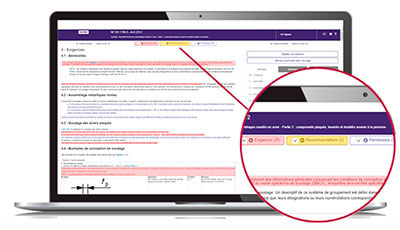
To comply with a standard, you need to quickly understand its issues in order to determine its impact on your activity.

The Requirements department helps you quickly locate within the normative text:

  • mandatory clauses to satisfy,
  • non-essential but useful clauses to know, such as permissions and recommendations.

The identification of these types of clauses is based on the document "ISO/IEC Directives, Part 2 - Principles and rules of structure and drafting of ISO documents" as well as on a constantly enriched list of verbal forms.

With Requirements, quickly access the main part of the normative text!

What is the Redline format?
Need to identify, monitor and decipher standards?