ISO 9241-143:2012
ISO 9241-143:2012

ISO 9241-143:2012

March 2012
International standard Current

Ergonomics of human-system interaction - Part 143 : forms

ISO 9241-143:2012 provides requirements and recommendations for the design and evaluation of forms, in which the user fills-in, selects entries for or modifies labelled fields on a "form" or dialogue box presented by the system. Often the system then creates or updates the data associated with the form. Form-based entries typically are in the form of typed input (abbreviations, or full names) or selections from available option lists. ISO 9241-143:2012 is applicable to forms regardless of the modality in which they are rendered (visual, spatial, vocal); much of its guidance is based on a model of visual and spatial relationship. In addition, it specifies the use of non-text methods for providing forms entries (e.g. list boxes) and pertains to dialogue boxes which utilize form techniques. Guidance is provided on the selection and design of those user-interface elements relevant to forms. While it covers lists used to enter forms data, menus which are similar to lists are outside its scope (see ISO 9241‑14). It is not applicable to the hardware aspects of forms.The requirements and recommendations in ISO 9241-143:2012 are applicable throughout the development process (for example, as guidance for designers during design, as a basis for heuristic evaluation, as guidance for usability testing) and in the procurement process.


View the extract
Main informations

Collections

International ISO standards

Thematics

Sécurité, Silver économie, Gestion des risques et SST, Accessibilité, QSE

Publication date

March 2012

Number of pages

95 p.

Reference

ISO 9241-143:2012

ICS Codes

13.180   Ergonomics
35.180   IT terminal and other peripheral equipment

Print number

1 - mars 2012
Sumary
Ergonomics of human-system interaction - Part 143 : forms

ISO 9241-143:2012 provides requirements and recommendations for the design and evaluation of forms, in which the user fills-in, selects entries for or modifies labelled fields on a "form" or dialogue box presented by the system. Often the system then creates or updates the data associated with the form. Form-based entries typically are in the form of typed input (abbreviations, or full names) or selections from available option lists.

ISO 9241-143:2012 is applicable to forms regardless of the modality in which they are rendered (visual, spatial, vocal); much of its guidance is based on a model of visual and spatial relationship. In addition, it specifies the use of non-text methods for providing forms entries (e.g. list boxes) and pertains to dialogue boxes which utilize form techniques. Guidance is provided on the selection and design of those user-interface elements relevant to forms.

While it covers lists used to enter forms data, menus which are similar to lists are outside its scope (see ISO 9241‑14). It is not applicable to the hardware aspects of forms.

The requirements and recommendations in ISO 9241-143:2012 are applicable throughout the development process (for example, as guidance for designers during design, as a basis for heuristic evaluation, as guidance for usability testing) and in the procurement process.
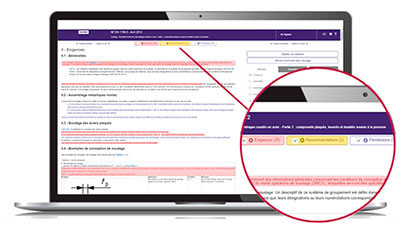
ZOOM ON ... the Requirements department

To comply with a standard, you need to quickly understand its issues in order to determine its impact on your activity.

The Requirements department helps you quickly locate within the normative text:

  • mandatory clauses to satisfy,
  • non-essential but useful clauses to know, such as permissions and recommendations.

The identification of these types of clauses is based on the document "ISO/IEC Directives, Part 2 - Principles and rules of structure and drafting of ISO documents" as well as on a constantly enriched list of verbal forms.

With Requirements, quickly access the main part of the normative text!


What is the Redline format?
Need to identify, monitor and decipher standards?