ISO/TS 22559-2:2010
ISO/TS 22559-2:2010

ISO/TS 22559-2:2010

September 2010
Technical specification Current

Safety requirements for lifts (elevators) - Part 2 : safety parameters meeting the global essential safety requirements (GESRs)

ISO/TS 22559-2:2010 specifies global safety parameters (GSPs) for lifts (elevators), their components and their functions, and complements the system and methods specified in ISO/TS 22559-1 for mitigating safety risks that can arise in the course of the operation and use of, or work on, lifts (elevators).ISO/TS 22559-2:2010 is applicable to lifts that cana) be located in any permanent and fixed structure within or attached to a building, except lifts located in private residences (single family units) or means of transport, e.g. ships,b) have any rated load, size of load-carrying unit and speed, and travel distance and number of landings, c) be affected by fire in the load-carrying unit, earthquakes, weather or floods, andd) be foreseeably misused (e.g. overloaded), but not vandalized.

View the extract
Main informations

Collections

International ISO standards

Publication date

September 2010

Number of pages

40 p.

Reference

ISO/TS 22559-2:2010

ICS Codes

91.140.90   Lifts. Escalators

Print number

1 - septembre 2010
Sumary
Safety requirements for lifts (elevators) - Part 2 : safety parameters meeting the global essential safety requirements (GESRs)

ISO/TS 22559-2:2010 specifies global safety parameters (GSPs) for lifts (elevators), their components and their functions, and complements the system and methods specified in ISO/TS 22559-1 for mitigating safety risks that can arise in the course of the operation and use of, or work on, lifts (elevators).

ISO/TS 22559-2:2010 is applicable to lifts that can

a) be located in any permanent and fixed structure within or attached to a building, except lifts located in private residences (single family units) or means of transport, e.g. ships,

b) have any rated load, size of load-carrying unit and speed, and travel distance and number of landings,

c) be affected by fire in the load-carrying unit, earthquakes, weather or floods, and

d) be foreseeably misused (e.g. overloaded), but not vandalized.

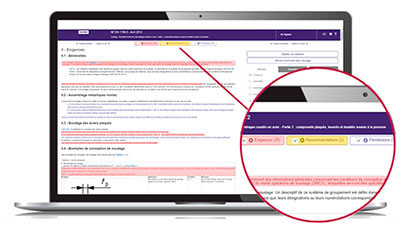
ZOOM ON ... the Requirements department

To comply with a standard, you need to quickly understand its issues in order to determine its impact on your activity.

The Requirements department helps you quickly locate within the normative text:

  • mandatory clauses to satisfy,
  • non-essential but useful clauses to know, such as permissions and recommendations.

The identification of these types of clauses is based on the document "ISO/IEC Directives, Part 2 - Principles and rules of structure and drafting of ISO documents" as well as on a constantly enriched list of verbal forms.

With Requirements, quickly access the main part of the normative text!


Need to identify, monitor and decipher standards?