

NF EN 10016-3
NF EN 10016-3

NF EN 10016-3

August 1995
Standard Cancelled

Non-alloy steel rod for drawing and/or cold rolling. Part 3 : specific requirements for rimmed and rimmed substitute low carbon steel rod.

Le présent document définit les caractéristiques du fil machine en acier effervescent ou pseudo-effervescent à bas carbone : composition chimique, santé interne et qualité de surface, profondeur des défauts de surface, propreté inclusionnaire et caractéristiques mécaniques.

Main informations

Collections

National standards and national normative documents

Publication date

August 1995

Number of pages

8 p.

Reference

NF EN 10016-3

ICS Codes

77.140.65   Steel wire, wire ropes and link chains

Classification index

A35-051-3

Print number

1 - août 1995

European kinship

EN 10016-3:1994
Sumary
Non-alloy steel rod for drawing and/or cold rolling. Part 3 : specific requirements for rimmed and rimmed substitute low carbon steel rod.

Le présent document définit les caractéristiques du fil machine en acier effervescent ou pseudo-effervescent à bas carbone : composition chimique, santé interne et qualité de surface, profondeur des défauts de surface, propreté inclusionnaire et caractéristiques mécaniques.
Standard replaced by (1)
NF EN ISO 16120-3
NF EN ISO 16120-3
November 2011
Standard Current
Non-alloy steel wire rod for conversion to wire — Part 3: Specific requirements for rimmed and rimmed substitute, low-carbon steel wire rod

Table of contents
  • Avant-propos
    3
  • 1 Domaine d'application
    4
  • 2 Références normatives
    4
  • 3 Prescriptions
    4
  • 3.1 Composition chimique
    4
  • 3.2 Santé interne et qualité de surface
    5
  • 3.3 Profondeur des défauts de surface
    5
  • 3.4 Contrôle des inclusions non métalliques
    5
  • 3.5 Caractéristiques mécaniques
    6
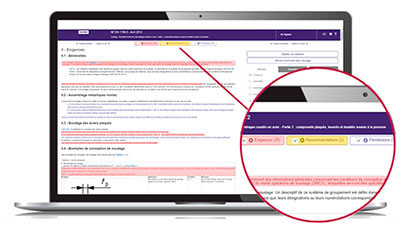
ZOOM ON ... the Requirements department

To comply with a standard, you need to quickly understand its issues in order to determine its impact on your activity.

The Requirements department helps you quickly locate within the normative text:

  • mandatory clauses to satisfy,
  • non-essential but useful clauses to know, such as permissions and recommendations.

The identification of these types of clauses is based on the document "ISO/IEC Directives, Part 2 - Principles and rules of structure and drafting of ISO documents" as well as on a constantly enriched list of verbal forms.

With Requirements, quickly access the main part of the normative text!


New: UPSELL service
Need to identify, monitor and decipher standards?