

NF EN 12402
NF EN 12402

NF EN 12402

November 1999
Standard Current

Lead and lead alloys. Methods of sampling for analysis

Le présent document spécifie les modes de préparation des échantillons de plombet alliages de plomb pour analyse spectrométrique ou analyse chimique, soit parprélèvement de métal liquide dans le bain en fusion, soit à partir des livraisons delingots.

Main informations

Collections

National standards and national normative documents

Publication date

November 1999

Number of pages

14 p.

Reference

NF EN 12402

ICS Codes

71.040.40   Chemical analysis
77.120.60   Lead, zinc, tin and their alloys

Classification index

A06-400

Print number

1 - mars 2004

European kinship

EN 12402:1999
Sumary
Lead and lead alloys. Methods of sampling for analysis

Le présent document spécifie les modes de préparation des échantillons de plombet alliages de plomb pour analyse spectrométrique ou analyse chimique, soit parprélèvement de métal liquide dans le bain en fusion, soit à partir des livraisons delingots.
Table of contents
  • Avant-propos
    3
  • 1 Domaine d'application
    4
  • 2 Références normatives
    4
  • 3 Définitions
    4
  • 4 Principe
    4
  • 5 Échantillonnage du plomb ou des alliages de plomb en fusion
    5
  • 5.1 Conditions d'échantillonnage
    5
  • 5.2 Appareillage
    5
  • 5.3 Mode opératoire
    5
  • 6 Échantillonnage des livraisons de lingots de plomb et d'alliages de plomb pour l'analyse chimique
    7
  • 6.1 Sélection des lingots
    7
  • 6.2 Préparation des échantillons
    7
  • 6.3 Échantillons de laboratoire
    8
  • 7 Échantillonnage d'un seul lingot de plomb ou d'alliage de plomb
    9
  • 7.1 Préparation de l'échantillon
    9
  • 7.2 Échantillons de laboratoire
    9
  • 8 Sécurité
    10
  • Annexe A (informative) Exemple de moule permettant l'obtention de disques de métal en forme de champignon (section transversale)
    12
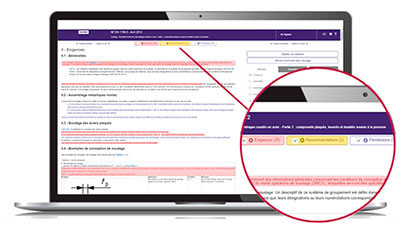
ZOOM ON ... the Requirements department

To comply with a standard, you need to quickly understand its issues in order to determine its impact on your activity.

The Requirements department helps you quickly locate within the normative text:

  • mandatory clauses to satisfy,
  • non-essential but useful clauses to know, such as permissions and recommendations.

The identification of these types of clauses is based on the document "ISO/IEC Directives, Part 2 - Principles and rules of structure and drafting of ISO documents" as well as on a constantly enriched list of verbal forms.

With Requirements, quickly access the main part of the normative text!


New: UPSELL service
Need to identify, monitor and decipher standards?