
NF EN 12697-49
NF EN 12697-49

NF EN 12697-49

February 2022
Standard Current

Bituminous mixtures - Test methods - Part 49 : determination of friction after polishing

Le présent document décrit une méthode d'essai pour déterminer par mesurage le coefficient de frottement après polissage d'éprouvettes d'enrobés bitumineux.

Main informations

Collections

National standards and national normative documents

Publication date

February 2022

Number of pages

32 p.

Reference

NF EN 12697-49

ICS Codes

75.140   Waxes, bituminous materials and other petroleum products
93.080.20   Road construction materials

Classification index

P98-818-49

Print number

1

European kinship

EN 12697-49:2022
Sumary
Bituminous mixtures - Test methods - Part 49 : determination of friction after polishing

Le présent document décrit une méthode d'essai pour déterminer par mesurage le coefficient de frottement après polissage d'éprouvettes d'enrobés bitumineux.
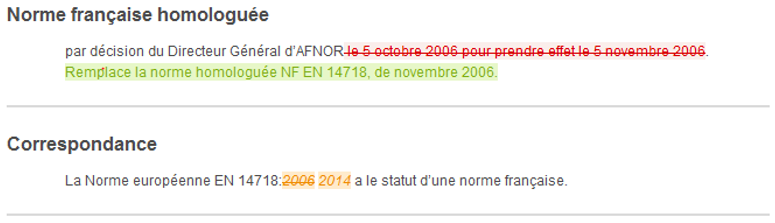
Replaced standards (1)
NF EN 12697-49
NF EN 12697-49
March 2014
Standard Cancelled
Bituminous mixtures - Test methods for hot mix asphalt - Part 49 : determination of friction after polishing

Le présent document décrit une méthode d'essai permettant de déterminer le frottement à 60km/h après un polissage après un nombre déterminé de passes à la surface de l'échantillon de mélanges bitumineux.

Table of contents
  • Avant-propos européen
  • 1 Domaine d'application
  • 2 Références normatives
  • 3 Termes, définitions, symboles et abréviations
  • 4 Principe
  • 5 Appareillage
  • 6 Autres matériaux
  • 7 Méthode d'essai
  • 8 Calcul et expression des résultats
  • 9 Rapport d'essai
  • 10 Fidélité
  • Annexe A (informative) Exemple de tête de polissage et de dispositif de mesurage du frottement
  • Annexe B (informative) Résultats obtenus à partir de la courbe FAP en fonction du nombre de passes
  • Annexe C (Informative) Expériences nationales
  • Bibliographie
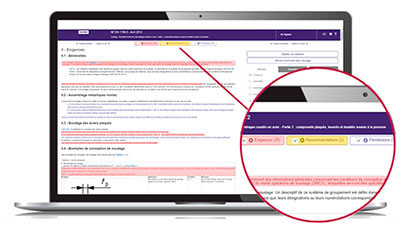
ZOOM ON ... the Requirements department
To comply with a standard, you need to quickly understand its issues in order to determine its impact on your activity.

The Requirements department helps you quickly locate within the normative text:
- mandatory clauses to satisfy,
- non-essential but useful clauses to know, such as permissions and recommendations.

The identification of these types of clauses is based on the document “ISO / IEC Directives, Part 2 - Principles and rules of structure and drafting of ISO documents ”as well as on a constantly enriched list of verbal forms.

With Requirements, quickly access the main part of the normative text!

With Requirements, quickly access the main part of the normative text!
What is the Redline format?
New: UPSELL service
Need to identify, monitor and decipher standards?