NF EN 16171
NF EN 16171

NF EN 16171

November 2016
Standard Cancelled

Sludge, treated biowaste and soil - Determination of elements using inductively coupled plasma mass spectrometry (ICP-MS)

Le présent document spécifie une méthode de détermination des éléments suivants dans des digestats d'eau régale ou d'acide nitrique de boues, de bio-déchets traités et de sols :Aluminium (Al), antimoine (Sb), arsenic (As), baryum (Ba), béryllium (Be), bismuth (Bi), bore (B), cadmium (Cd), calcium (Ca), cérium (Ce), chrome (Cr), cobalt (Co), cuivre (Cu), dysprosium (Dy), erbium (Er), europium (Eu), gadolinium (Gd), gallium (Ga), germanium (Ge), or (Au), hafnium (Hf), holmium (Ho), indium (In), iridium (Ir), fer (Fe), lanthane (La), plomb (Pb), lithium (Li), lutécium (Lu), magnésium (Mg), manganèse (Mn), mercure (Hg), molybdène (Mo), néodyme (Nd), nickel (Ni), palladium (Pd), phosphore (P), platine (Pt), potassium (K), praséodyme (Pr), rhénium (Re), rhodium (Rh), rubidium (Rb), ruthénium (Ru), samarium (Sm), scandium (Sc), sélénium (Se), silicium (Si), argent (Ag), sodium (Na), strontium (Sr), soufre (S), tellure (Te), terbium (Tb), thallium (Tl), thulium (Tm), étain (Sn), titane (Ti), tungstène (W), uranium (U), vanadium (V), ytterbium(Yb), yttrium (Y), zinc (Zn) et zirconium (Zr).


Main informations

Collections

National standards and national normative documents

Publication date

November 2016

Number of pages

28 p.

Reference

NF EN 16171

ICS Codes

13.030.01   Wastes in general
13.080.10   Chemical characteristics of soils

Print number

1

European kinship

EN 16171:2016
Sumary
Sludge, treated biowaste and soil - Determination of elements using inductively coupled plasma mass spectrometry (ICP-MS)

Le présent document spécifie une méthode de détermination des éléments suivants dans des digestats d'eau régale ou d'acide nitrique de boues, de bio-déchets traités et de sols : Aluminium (Al), antimoine (Sb), arsenic (As), baryum (Ba), béryllium (Be), bismuth (Bi), bore (B), cadmium (Cd), calcium (Ca), cérium (Ce), chrome (Cr), cobalt (Co), cuivre (Cu), dysprosium (Dy), erbium (Er), europium (Eu), gadolinium (Gd), gallium (Ga), germanium (Ge), or (Au), hafnium (Hf), holmium (Ho), indium (In), iridium (Ir), fer (Fe), lanthane (La), plomb (Pb), lithium (Li), lutécium (Lu), magnésium (Mg), manganèse (Mn), mercure (Hg), molybdène (Mo), néodyme (Nd), nickel (Ni), palladium (Pd), phosphore (P), platine (Pt), potassium (K), praséodyme (Pr), rhénium (Re), rhodium (Rh), rubidium (Rb), ruthénium (Ru), samarium (Sm), scandium (Sc), sélénium (Se), silicium (Si), argent (Ag), sodium (Na), strontium (Sr), soufre (S), tellure (Te), terbium (Tb), thallium (Tl), thulium (Tm), étain (Sn), titane (Ti), tungstène (W), uranium (U), vanadium (V), ytterbium(Yb), yttrium (Y), zinc (Zn) et zirconium (Zr).
Replaced standards (1)
XP CEN/TS 16171
XP CEN/TS 16171
February 2013
Standard Cancelled
Sludge, treated biowaste and soil - Determination of trace elements using inductively coupled plasma mass spectrometry (ICP-MS)

Le présent document spécifie une méthode de détermination des éléments suivants dans des digestats d'eau régale et d'acide nitrique de boues, de bio-déchets traités et de sols.

Standard replaced by (1)
NF EN ISO 16965
NF EN ISO 16965
September 2025
Standard Current
Environmental solid matrices - Determination of elements using inductively coupled plasma mass spectrometry (ICP-MS)

Table of contents
  • Avant-propos européen
  • 1 Domaine d'application
  • 2 Références normatives
  • 3 Principe
  • 4 Interférences
  • 5 Réactifs
  • 6 Appareillage
  • 7 Mode opératoire
  • 8 Calcul
  • 9 Expression des résultats
  • 10 Caractéristiques de performance
  • 11 Rapport d'essai
  • Annexe A (informative)Données de répétabilité et de reproductibilité
  • Annexe B (informative)Isotopes sélectionnés et interférences spectrales pour les instruments d'ICP-MS quadripolaires
  • Bibliographie Bibliographie
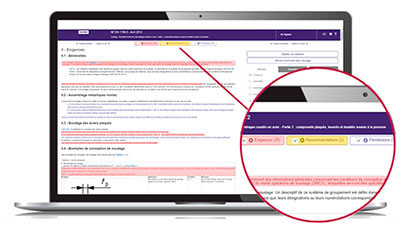
ZOOM ON ... the Requirements department

To comply with a standard, you need to quickly understand its issues in order to determine its impact on your activity.

The Requirements department helps you quickly locate within the normative text:

  • mandatory clauses to satisfy,
  • non-essential but useful clauses to know, such as permissions and recommendations.

The identification of these types of clauses is based on the document "ISO/IEC Directives, Part 2 - Principles and rules of structure and drafting of ISO documents" as well as on a constantly enriched list of verbal forms.

With Requirements, quickly access the main part of the normative text!


What is the Redline format?
New: UPSELL service
Need to identify, monitor and decipher standards?