
NF EN 16361+A1
NF EN 16361+A1

NF EN 16361+A1

July 2016
Standard Current

Power operated pedestrian doors - Product standard, performance characteristics - Pedestrian doorsets, other than swing type, initially designed for installation with power operation

Le présent document spécifie les exigences et les méthodes d''essai/d''évaluation/de calcul pour les blocs-portes motorisés pour piétons, extérieurs et intérieurs, autres que de type battant, initialement conçus pour une installation avec un système de motorisation.

Main informations

Collections

National standards and national normative documents

Publication date

July 2016

Number of pages

51 p.

Reference

NF EN 16361+A1

ICS Codes

91.060.50   Doors and windows

Print number

1

European kinship

EN 16361+A1:2016
Sumary
Power operated pedestrian doors - Product standard, performance characteristics - Pedestrian doorsets, other than swing type, initially designed for installation with power operation

Le présent document spécifie les exigences et les méthodes d''essai/d''évaluation/de calcul pour les blocs-portes motorisés pour piétons, extérieurs et intérieurs, autres que de type battant, initialement conçus pour une installation avec un système de motorisation.
Replaced standards (1)
NF EN 16361
NF EN 16361
November 2013
Standard Cancelled
Power operated pedestrian doors - Product standard, performance characteristics - Pedestrian doorsets, other than swing type, initially designed for installation with power operation without resistance to fire and smoke leakage characteristics

Le présent document spécifie les exigences et les méthodes d'essai/ d'évaluation/ de calcul pour les blocs-portes motorisés pour piétons, extérieurs et intérieurs, autres que de type battant, initialement conçus pour une installation avec un système de motorisation sans caractéristiques de résistance au feu ni pare-fumée.

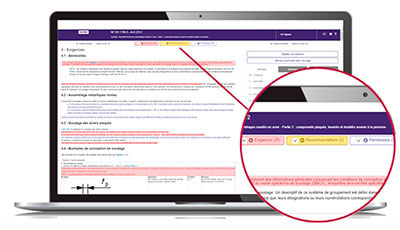
ZOOM ON ... the Requirements department

To comply with a standard, you need to quickly understand its issues in order to determine its impact on your activity.

The Requirements department helps you quickly locate within the normative text:

  • mandatory clauses to satisfy,
  • non-essential but useful clauses to know, such as permissions and recommendations.

The identification of these types of clauses is based on the document "ISO/IEC Directives, Part 2 - Principles and rules of structure and drafting of ISO documents" as well as on a constantly enriched list of verbal forms.

With Requirements, quickly access the main part of the normative text!


What is the Redline format?
New: UPSELL service
Need to identify, monitor and decipher standards?