

NF EN 302217-1
NF EN 302217-1

NF EN 302217-1

January 2022
Standard Cancelled

Fixed Radio Systems - Characteristics and requirements for point-to-point equipment and antennas - Part 1 : Overview, common characteristics and requirements not related to access to radio spectrum (V3.3.1)

Le présent document s''applique aux systèmes radioélectriques fixes numériques (DFRS) fonctionnant en mode point à point avec des antennes intégrées et externes dans la plage de fréquences de 1 GHz à 86 GHz correspondant aux bandes de fréquences appropriées de 1,4 GHz à 86 GHz décrites dans l''ETSI EN 302 217-2 [16], Annexes B à J.

Main informations

Collections

National standards and national normative documents

Publication date

January 2022

Number of pages

97 p.

Reference

NF EN 302217-1

ICS Codes

33.060.30   Radio relay and fixed satellite communications systems

Print number

1
Sumary
Fixed Radio Systems - Characteristics and requirements for point-to-point equipment and antennas - Part 1 : Overview, common characteristics and requirements not related to access to radio spectrum (V3.3.1)

Le présent document s''applique aux systèmes radioélectriques fixes numériques (DFRS) fonctionnant en mode point à point avec des antennes intégrées et externes dans la plage de fréquences de 1 GHz à 86 GHz correspondant aux bandes de fréquences appropriées de 1,4 GHz à 86 GHz décrites dans l''ETSI EN 302 217-2 [16], Annexes B à J.
Replaced standards (1)
NF EN 302217-1
NF EN 302217-1
August 2020
Standard Cancelled
Fixed Radio Systems - Characteristics and requirements for point-to-point equipment and antennas - Part 1 : overview, common characteristics and system-independent requirements (V3.2.2)

Standard replaced by (1)
NF EN 302217-1
NF EN 302217-1
September 2025
Standard Current
Fixed Radio Systems - Characteristics and requirements for point-to-point equipment and antennas - Part 1: Overview, common characteristics and requirements not related to access to radio spectrum (V3.4.1)

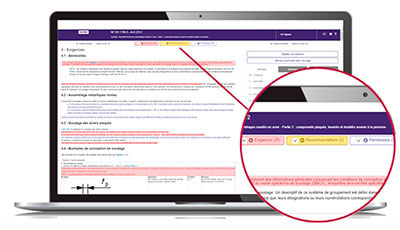
ZOOM ON ... the Requirements department

To comply with a standard, you need to quickly understand its issues in order to determine its impact on your activity.

The Requirements department helps you quickly locate within the normative text:

  • mandatory clauses to satisfy,
  • non-essential but useful clauses to know, such as permissions and recommendations.

The identification of these types of clauses is based on the document "ISO/IEC Directives, Part 2 - Principles and rules of structure and drafting of ISO documents" as well as on a constantly enriched list of verbal forms.

With Requirements, quickly access the main part of the normative text!


New: UPSELL service
Need to identify, monitor and decipher standards?