
NF EN ISO 10275
NF EN ISO 10275

NF EN ISO 10275

August 2014
Standard Cancelled

Metallic materials - Sheet and strip - Determination of tensile strain hardening exponent

Le présent document spécifie une méthode pour la détermination du coefficient d''écrouissage en traction des produits plats (tôles et bandes) en matériaux métalliques.

Main informations

Collections

National standards and national normative documents

Publication date

August 2014

Release date

octobre 2020

Number of pages

20 p.

Reference

NF EN ISO 10275

ICS Codes

77.040.10   Mechanical testing of metals

Print number

1

International kinship

European kinship

EN ISO 10275:2014
Sumary
Metallic materials - Sheet and strip - Determination of tensile strain hardening exponent

Le présent document spécifie une méthode pour la détermination du coefficient d''écrouissage en traction des produits plats (tôles et bandes) en matériaux métalliques.
Replaced standards (1)
NF A03-659
NF A03-659
November 2001
Standard Cancelled
Iron and steel - Method of determination of the tensile strain hardening exponent n of steel sheet and plate

Le présent document définit une méthode de détermination du coefficient d''écrouissage, n, des tôles en acier caractérisant la ductilité du métal et son aptitude à répartir la déformation.

Standard replaced by (1)
NF EN ISO 10275
NF EN ISO 10275
September 2020
Standard Current
Metallic materials — Sheet and strip — Determination of tensile strain hardening exponent

Le présent document spécifie une méthode pour la détermination du coefficient d''écrouissage en traction, n, des produits plats (tôles et bandes) en matériaux métalliques. La méthode ne peut être appliquée que dans le domaine de déformation plastique uniforme. Il définit le principe, l''équipement d''essai, les éprouvettes, le mode opératoire, le contenu du rapport d''essai, et fournit en annexe informative une comparaison internationale des symboles utilisés pour la détermination du coefficient d''écrouissage en traction.

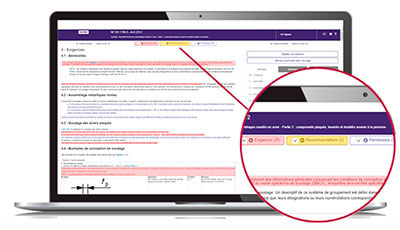
ZOOM ON ... the Requirements department

To comply with a standard, you need to quickly understand its issues in order to determine its impact on your activity.

The Requirements department helps you quickly locate within the normative text:

  • mandatory clauses to satisfy,
  • non-essential but useful clauses to know, such as permissions and recommendations.

The identification of these types of clauses is based on the document "ISO/IEC Directives, Part 2 - Principles and rules of structure and drafting of ISO documents" as well as on a constantly enriched list of verbal forms.

With Requirements, quickly access the main part of the normative text!


What is the Redline format?
New: UPSELL service
Need to identify, monitor and decipher standards?