

NF EN ISO 1833-4
NF EN ISO 1833-4

NF EN ISO 1833-4

December 2010
Standard Cancelled

Textiles - Quantitative chemical analysis - Part 4 : mixtures of certain protein and certain other fibres (method using hypochlorite)

Le présent document spécifie une méthode de détermination qui s''applique, après élimination des matières non fibreuses, aux mélanges binaires de certaines fibres non protéiniques et d''une fibre protéinique, comme suit : - laine, laine chimiquement traitée, soie grège et décreusée, soie Tussah grège et blanchie, mohair, cachemire, fibres protéiniques régénérées à base de caséine, avec - coton, cupro, viscose, modal, acrylique, chlorofibres, polyamide, polyester, polypropylène et verre textile. Si plusieurs fibres protéiniques sont présentes, la méthode fournit leur quantité globale et non leurs pourcentages individuels.

Main informations

Collections

National standards and national normative documents

Publication date

December 2010

Release date

janvier 2018

Number of pages

10 p.

Reference

NF EN ISO 1833-4

ICS Codes

59.060.01   Textile fibres in general

International kinship

European kinship

EN ISO 1833-4:2010
Sumary
Textiles - Quantitative chemical analysis - Part 4 : mixtures of certain protein and certain other fibres (method using hypochlorite)

Le présent document spécifie une méthode de détermination qui s''applique, après élimination des matières non fibreuses, aux mélanges binaires de certaines fibres non protéiniques et d''une fibre protéinique, comme suit : - laine, laine chimiquement traitée, soie grège et décreusée, soie Tussah grège et blanchie, mohair, cachemire, fibres protéiniques régénérées à base de caséine, avec - coton, cupro, viscose, modal, acrylique, chlorofibres, polyamide, polyester, polypropylène et verre textile. Si plusieurs fibres protéiniques sont présentes, la méthode fournit leur quantité globale et non leurs pourcentages individuels.
Replaced standards (1)
NF ISO 1833-4
NF ISO 1833-4
December 2006
Standard Cancelled
Textiles - Quantitative chemical analysis - Part 4 : mixtures of certain protein and certain other fibres (method using hypochlorite)

ISO 1833-4:2006 specifies a method, using hypochlorite, to determine the percentage of protein fibre, after removal of non-fibrous matter, in textiles made of binary mixtures of certain non-protein fibres and one protein fibre, as follows: wool, chemically-treated wool, other animal-hair fibres, silk, regenerated protein fibres based on casein, and cotton, cupro, viscose, modal, acrylic, chlorofibres, polyamide, polyester, polypropylene, glass and elastane. If several protein fibres are present, the method gives the total of their amounts but not their individual quantities.

Standard replaced by (1)
NF EN ISO 1833-4
NF EN ISO 1833-4
February 2018
Standard Cancelled
Textiles — Quantitative chemical analysis — Part 4: Mixtures of certain protein fibres with certain other fibres (method using hypochlorite)

Le présent document spécifie une méthode de détermination, à l''hypochlorite, de la masse, exprimée en pourcentage, de fibres protéiniques, après élimination des matières non fibreuses, dans les textiles composés de mélanges de certaines fibres non protéiniques et de certaines fibres protéiniques, comme suit : laine, autres poils animaux (par exemple cachemire, mohair) , soie, protéines ; avec coton, cupro, viscose, modal, acrylique, chlorofibres, polyamide, polyester, polypropylène, verre textile, élasthanne, élastomultiester, élastoléfine, mélamine et bicomposant polypropylène/ polyamide.

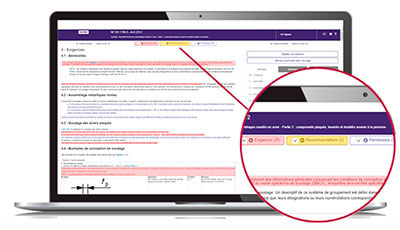
ZOOM ON ... the Requirements department

To comply with a standard, you need to quickly understand its issues in order to determine its impact on your activity.

The Requirements department helps you quickly locate within the normative text:

  • mandatory clauses to satisfy,
  • non-essential but useful clauses to know, such as permissions and recommendations.

The identification of these types of clauses is based on the document "ISO/IEC Directives, Part 2 - Principles and rules of structure and drafting of ISO documents" as well as on a constantly enriched list of verbal forms.

With Requirements, quickly access the main part of the normative text!


New: UPSELL service
Need to identify, monitor and decipher standards?