NF EN ISO 21660-3
Solid recovered fuels - Determination of moisture content using the oven dry method - Part 3 : moisture in general analysis sample
This document specifies a method for the determination of moisture in a general analysis sample by drying the sample in an oven. This method is suitable for use for general analysis samples in accordance with CEN/TS 15414‑1[3][1]. It is applicable to all solid recovered fuels.If solid recovered fuels contain large amounts of oil-fractions the Karl-Fischer-Method (for example ISO 760) is advisable. Otherwise, a lower temperature is recommended (e.g. 50 °C ± 10 °C) and a longer drying time until constant mass is achieved.NOTE The term moisture content, when used with recovered materials, can be misleading since solid recovered materials, e. g. biomass, frequently contain varying amounts of volatile compounds (extractives) which can evaporate when determining the moisture content of the general analyses sample by oven drying.[1] The adoption of the standard series EN 15414 as standard series ISO 21660 is planned. ISO 21660‑3 is published in parallel at CEN level as EN 21660-3.
This document specifies a method for the determination of moisture in a general analysis sample by drying the sample in an oven. This method is suitable for use for general analysis samples in accordance with CEN/TS 15414‑1[3][1]. It is applicable to all solid recovered fuels.
If solid recovered fuels contain large amounts of oil-fractions the Karl-Fischer-Method (for example ISO 760) is advisable. Otherwise, a lower temperature is recommended (e.g. 50 °C ± 10 °C) and a longer drying time until constant mass is achieved.
NOTE The term moisture content, when used with recovered materials, can be misleading since solid recovered materials, e. g. biomass, frequently contain varying amounts of volatile compounds (extractives) which can evaporate when determining the moisture content of the general analyses sample by oven drying.
[1] The adoption of the standard series EN 15414 as standard series ISO 21660 is planned. ISO 21660‑3 is published in parallel at CEN level as EN 21660-3.
Le présent document spécifie une méthode de détermination de l'humidité d'un échantillon d'analyse en le séchant dans une étuve. Cette méthode convient à une utilisation pour des échantillons d'analyse généraux conformément à la norme CEN/TS 15414-1. Elle s'applique à tous les combustibles solides de récupération.
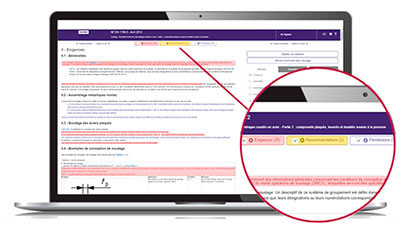
The Requirements department helps you quickly locate within the normative text:
- mandatory clauses to satisfy,
- non-essential but useful clauses to know, such as permissions and recommendations.
The identification of these types of clauses is based on the document “ISO / IEC Directives, Part 2 - Principles and rules of structure and drafting of ISO documents ”as well as on a constantly enriched list of verbal forms.
With Requirements, quickly access the main part of the normative text!

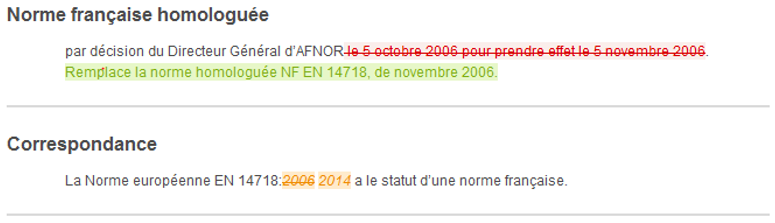
At a glance, you will be able to identify the additions, deletions or modifications to a text, table, figure and formula.

The Redlines + service is offered to you on the collection of French standards in force, in French language and in HTML and PDF format.
For an overview of the service, click on View a standard in redline format
- With a single click, add a new language, the Requirements or Redline+ service and add one or more additional users.
- Whether you are in the process of acquiring a standard or it is already available in your personal space, the UPSELL service is available at every stage to help you understand it and implement it within your organization.
COBAZ is the simple and effective solution to meet the normative needs related to your activity, in France and abroad.
Available by subscription, CObaz is THE modular solution to compose according to your needs today and tomorrow. Quickly discover CObaz!
Request your free, no-obligation live demo
I discover COBAZ