

NF EN ISO 21968
NF EN ISO 21968

NF EN ISO 21968

December 2005
Standard Cancelled

Non-magnetic metallic coatings on metallic and non-metallic basis materials — Measurement of coating thickness — Phase-sensitive eddy-current method

Main informations

Collections

National standards and national normative documents

Publication date

December 2005

Release date

octobre 2019

Number of pages

18 p.

Reference

NF EN ISO 21968

ICS Codes

25.220.40   Metallic coatings

Print number

1 - décembre 2005

International kinship

ISO 21968:2005

European kinship

EN ISO 21968:2005
Standard replaced by (1)
NF EN ISO 21968
NF EN ISO 21968
October 2019
Standard Current
Non-magnetic metallic coatings on metallic and non-metallic basis materials - Measurement of coating thickness - Phase-sensitive eddy-current method

This document specifies a method for using phase-sensitive eddy-current instruments for non-destructive measurements of the thickness of non-magnetic metallic coatings on metallic and non-metallic basis materials such as: a) zinc, cadmium, copper, tin or chromium on steel; b) copper or silver on composite materials. The phase-sensitive method can be applied without thickness errors to smaller surface areas and to stronger surface curvatures than the amplitude-sensitive eddy-current method specified in ISO 2360, and is less affected by the magnetic properties of the basis material. However, the phase-sensitive method is more affected by the electrical properties of the coating materials. In this document, the term "coating" is used for materials such as, for example, paints and varnishes, electroplated coatings, enamel coatings, plastic coatings, claddings and powder coatings. This method is particularly applicable to measurements of the thickness of metallic coatings. These coatings can be non-magnetic metallic coatings on non-conductive, conductive or magnetic base materials, but also magnetic coatings on non-conductive or conductive base materials. The measurement of metallic coatings on metallic basis material works only when the product of conductivity and permeability (σ, μ) of one of the materials is at least a factor of two times the product of conductivity and permeability for the other material. Non-ferromagnetic materials have a relative permeability of one.

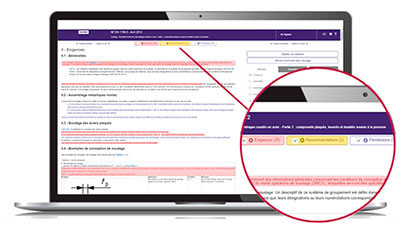
ZOOM ON ... the Requirements department

To comply with a standard, you need to quickly understand its issues in order to determine its impact on your activity.

The Requirements department helps you quickly locate within the normative text:

  • mandatory clauses to satisfy,
  • non-essential but useful clauses to know, such as permissions and recommendations.

The identification of these types of clauses is based on the document "ISO/IEC Directives, Part 2 - Principles and rules of structure and drafting of ISO documents" as well as on a constantly enriched list of verbal forms.

With Requirements, quickly access the main part of the normative text!


New: UPSELL service
Need to identify, monitor and decipher standards?