
NF EN ISO 3210
Anodizing of aluminium and its alloys - Assessment of quality of sealed anodic oxidation coatings by measurement of the loss of mass after immersion in phosphoric acid/chromic acid solution
ISO 3210:2010 specifies methods of assessing the quality of sealed anodic oxidation coatings on aluminium and its alloys by measurement of the loss of mass after immersion in phosphoric acid/chromic acid solution.ISO 3210:2010 consists of the following two methods.Method 1: assessment of quality of sealed anodic oxidation coatings by measurement of the loss of mass after immersion in phosphoric acid/chromic acid solution, without prior acid treatment.Method 2: assessment of quality of sealed anodic oxidation coatings by measurement of the loss of mass after immersion in phosphoric acid/chromic acid solution with prior acid treatment.Method 1 is applicable to anodic oxidation coatings intended for decorative or protective purposes or where resistance to staining is important.Method 2 is applicable to anodic oxidation coatings intended for architectural purposes. For less severe applications, Method 1 may be more suitable.The methods are not applicable to the following:hard-type anodic oxidation coatings which normally are not sealed;anodic oxidation coatings that have been sealed only in dichromate solutions;anodic oxidation coatings produced in chromic acid solutions;anodic oxidation coatings that have undergone a treatment to render them hydrophobic.
ISO 3210:2010 specifies methods of assessing the quality of sealed anodic oxidation coatings on aluminium and its alloys by measurement of the loss of mass after immersion in phosphoric acid/chromic acid solution.
ISO 3210:2010 consists of the following two methods.
- Method 1: assessment of quality of sealed anodic oxidation coatings by measurement of the loss of mass after immersion in phosphoric acid/chromic acid solution, without prior acid treatment.
- Method 2: assessment of quality of sealed anodic oxidation coatings by measurement of the loss of mass after immersion in phosphoric acid/chromic acid solution with prior acid treatment.
Method 1 is applicable to anodic oxidation coatings intended for decorative or protective purposes or where resistance to staining is important.
Method 2 is applicable to anodic oxidation coatings intended for architectural purposes. For less severe applications, Method 1 may be more suitable.
The methods are not applicable to the following:
- hard-type anodic oxidation coatings which normally are not sealed;
- anodic oxidation coatings that have been sealed only in dichromate solutions;
- anodic oxidation coatings produced in chromic acid solutions;
- anodic oxidation coatings that have undergone a treatment to render them hydrophobic.
Le présent document prescrit une méthode d'évaluation de la qualité des couches anodiques colmatées sur l'aluminium et ses alliages par mesurage de la perte de masse après immersion en solution phosphochromique sans traitement acide préalable.
Le présent document prescrit une méthode d'évaluation de la qualité des couches anodiques colmatées sur l'aluminium et ses alliages par mesurage de la perte de masse après immersion en solution phosphochromique avec traitement par acide préalable.
ISO 3210:2017 specifies methods of assessing the quality of sealed anodic oxidation coatings on aluminium and its alloys by measurement of the loss of mass after immersion in acid solution(s). It consists of the following two methods. - Method 1: Assessment of quality of sealed anodic oxidation coatings by measurement of the loss of mass after immersion in a phosphoric acid based solution without prior acid treatment. - Method 2: Assessment of quality of sealed anodic oxidation coatings by measurement of the loss of mass after immersion in a phosphoric acid based solution with prior acid treatment. Method 1 is applicable to anodic oxidation coatings intended for decorative or protective purposes or where resistance to staining is important. Method 2 is applicable to anodic oxidation coatings intended for outdoor architectural purposes. For less severe applications, Method 1 can be more suitable. The methods are not applicable to the following: - hard-type anodic oxidation coatings which normally are not sealed; - anodic oxidation coatings that have been sealed only in dichromate solutions; - anodic oxidation coatings produced in chromic acid solutions; - anodic oxidation coatings that have undergone treatment to render them hydrophobic. NOTE 1 The methods assess the quality of hydrothermal sealing applied to anodized aluminium. They can be appropriate for other sealing methods. NOTE 2 The methods are destructive and can serve as reference methods in case of doubt or dispute regarding the results of the test for loss of absorptive power (see ISO 2143) or the measurement of admittance (see ISO 2931).
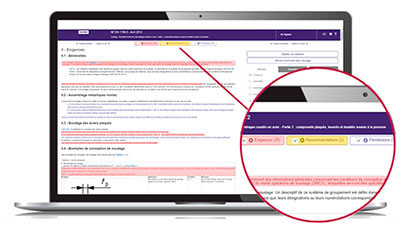
The Requirements department helps you quickly locate within the normative text:
- mandatory clauses to satisfy,
- non-essential but useful clauses to know, such as permissions and recommendations.
The identification of these types of clauses is based on the document “ISO / IEC Directives, Part 2 - Principles and rules of structure and drafting of ISO documents ”as well as on a constantly enriched list of verbal forms.
With Requirements, quickly access the main part of the normative text!

- With a single click, add a new language, the Requirements or Redline+ service and add one or more additional users.
- Whether you are in the process of acquiring a standard or it is already available in your personal space, the UPSELL service is available at every stage to help you understand it and implement it within your organization.
COBAZ is the simple and effective solution to meet the normative needs related to your activity, in France and abroad.
Available by subscription, CObaz is THE modular solution to compose according to your needs today and tomorrow. Quickly discover CObaz!
Request your free, no-obligation live demo
I discover COBAZ