
NF EN ISO 5667-6

NF EN ISO 5667-6

November 2016
Standard Current

Water quality - Sampling - Part 6 : guidance on sampling of rivers and streams

ISO 5667-6:2014 sets out the principles to be applied to the design of sampling programmes, sampling techniques, and the handling of water samples from rivers and streams for physical and chemical assessment.It is not applicable to the sampling of estuarine or coastal waters nor for microbiological sampling. (Procedures for microbiological sampling are given in ISO 19458.)ISO 5667-6:2014 is neither applicable to the examination of sediment, suspended solids or biota, nor to dammed stretches of rivers or streams. Also, it is not applicable to passive sampling of surface waters (see ISO 5667‑23).In cases where naturally occurring or artificially constructed dams result in the retention or storage of water for several days or more, the stretch of the river or stream should be considered as a standing water body. For sampling purposes, see ISO 5667‑4.

Main informations

Collections

National standards and national normative documents

Publication date

November 2016

Number of pages

42 p.

Reference

NF EN ISO 5667-6

ICS Codes

13.060.10   Water of natural resources
13.060.45   Examination of water in general

Classification index

T90-511-6

Print number

1

International kinship

European kinship

EN ISO 5667-6:2016
Sumary
Water quality - Sampling - Part 6 : guidance on sampling of rivers and streams

ISO 5667-6:2014 sets out the principles to be applied to the design of sampling programmes, sampling techniques, and the handling of water samples from rivers and streams for physical and chemical assessment.

It is not applicable to the sampling of estuarine or coastal waters nor for microbiological sampling. (Procedures for microbiological sampling are given in ISO 19458.)

ISO 5667-6:2014 is neither applicable to the examination of sediment, suspended solids or biota, nor to dammed stretches of rivers or streams. Also, it is not applicable to passive sampling of surface waters (see ISO 5667‑23).

In cases where naturally occurring or artificially constructed dams result in the retention or storage of water for several days or more, the stretch of the river or stream should be considered as a standing water body. For sampling purposes, see ISO 5667‑4.

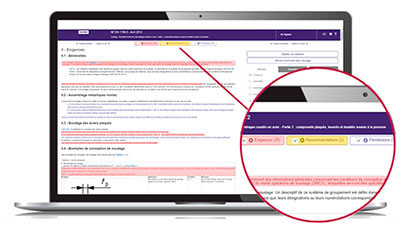
ZOOM ON ... the Requirements department
To comply with a standard, you need to quickly understand its issues in order to determine its impact on your activity.

The Requirements department helps you quickly locate within the normative text:
- mandatory clauses to satisfy,
- non-essential but useful clauses to know, such as permissions and recommendations.

The identification of these types of clauses is based on the document “ISO / IEC Directives, Part 2 - Principles and rules of structure and drafting of ISO documents ”as well as on a constantly enriched list of verbal forms.

With Requirements, quickly access the main part of the normative text!

With Requirements, quickly access the main part of the normative text!
New: UPSELL service
- The UPSELL service allows you to easily update one of your standards.
- With a single click, add a new language, the Requirements or Redline+ service and add one or more additional users.
- Whether you are in the process of acquiring a standard or it is already available in your personal space, the UPSELL service is available at every stage to help you understand it and implement it within your organization.
Need to identify, monitor and decipher standards?

COBAZ is the simple and effective solution to meet the normative needs related to your activity, in France and abroad.

Available by subscription, CObaz is THE modular solution to compose according to your needs today and tomorrow. Quickly discover CObaz!

Request your free, no-obligation live demo

I discover COBAZ