NF EN ISO 636
NF EN ISO 636

NF EN ISO 636

February 2016
Standard Cancelled

Welding consumables - Rods, wires and deposits for tungsten inert gas welding of non-alloy and fine-grain steels - Classification

ISO 636:2015 specifies requirements for classification of rods and wires in the as-welded condition and in the post-weld heat-treated condition for tungsten inert gas welding of non-alloy and fine-grain steels with a minimum yield strength of up to 500 MPa or a minimum tensile strength of up to 570 MPa.This International Standard is a combined specification providing classification utilizing a system based upon the yield strength and the average impact energy of 47 J of all-weld metal or utilizing a system based upon the tensile strength and the average impact energy of 27 J of all-weld metal.a) Paragraphs and tables which carry the suffix letter "A" are applicable only to rods and wires classified to the system based upon the yield strength and the average impact energy of 47 J of all-weld metal in accordance with this International Standard.b) Paragraphs and tables which carry the suffix letter "B" are applicable only to rods and wires classified to the system based upon the tensile strength and the average impact energy of 27 J of all-weld metal in accordance with this International Standard.c) Paragraphs and tables which have neither the suffix letter "A" nor the suffix letter "B" are applicable to all rods and wires classified in accordance with this International Standard.


Main informations

Collections

National standards and national normative documents

Publication date

February 2016

Number of pages

23 p.

Reference

NF EN ISO 636

ICS Codes

25.160.20   Welding consumables

Classification index

A81-325

Print number

1

International kinship

ISO 636:2015

European kinship

EN ISO 636:2015
Sumary
Welding consumables - Rods, wires and deposits for tungsten inert gas welding of non-alloy and fine-grain steels - Classification

ISO 636:2015 specifies requirements for classification of rods and wires in the as-welded condition and in the post-weld heat-treated condition for tungsten inert gas welding of non-alloy and fine-grain steels with a minimum yield strength of up to 500 MPa or a minimum tensile strength of up to 570 MPa.

This International Standard is a combined specification providing classification utilizing a system based upon the yield strength and the average impact energy of 47 J of all-weld metal or utilizing a system based upon the tensile strength and the average impact energy of 27 J of all-weld metal.

a) Paragraphs and tables which carry the suffix letter "A" are applicable only to rods and wires classified to the system based upon the yield strength and the average impact energy of 47 J of all-weld metal in accordance with this International Standard.

b) Paragraphs and tables which carry the suffix letter "B" are applicable only to rods and wires classified to the system based upon the tensile strength and the average impact energy of 27 J of all-weld metal in accordance with this International Standard.

c) Paragraphs and tables which have neither the suffix letter "A" nor the suffix letter "B" are applicable to all rods and wires classified in accordance with this International Standard.
Replaced standards (1)
NF EN ISO 636
NF EN ISO 636
August 2008
Standard Cancelled
Welding consumables - Rods, wires and deposits for tungsten inert gas welding of non-alloy and fine-grain steels - Classification

Standard replaced by (1)
NF EN ISO 636
NF EN ISO 636
June 2017
Standard Cancelled
Welding consumables — Rods, wires and deposits for tungsten inert gas welding of non-alloy and fine-grain steels — Classification

Table of contents
  • 1 Domaine d'application
  • 2 Références normatives
  • 3 Classification
  • 4 Symboles et exigences
  • 5 Essais mécaniques
  • 6 Analyse chimique
  • 7 Procédure d'arrondissage
  • 8 Contre-essais
  • 9 Conditions techniques de livraison
  • 10 Désignation
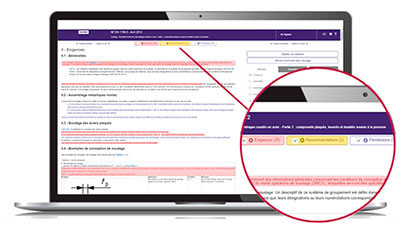
ZOOM ON ... the Requirements department

To comply with a standard, you need to quickly understand its issues in order to determine its impact on your activity.

The Requirements department helps you quickly locate within the normative text:

  • mandatory clauses to satisfy,
  • non-essential but useful clauses to know, such as permissions and recommendations.

The identification of these types of clauses is based on the document "ISO/IEC Directives, Part 2 - Principles and rules of structure and drafting of ISO documents" as well as on a constantly enriched list of verbal forms.

With Requirements, quickly access the main part of the normative text!


What is the Redline format?
New: UPSELL service
Need to identify, monitor and decipher standards?