

NF EN ISO 787-18
NF EN ISO 787-18

NF EN ISO 787-18

October 1995
Standard Current

General methods of test for pigments and extenders. Part 18 : determination of residue on sieve. Mechanical flushing procedure.

The method specified can also be applied to the examination of other powders or granules which are insoluble in water. It is neither applicable to hydrophobic nor pelletized materials. In the test apparatus the material under test, dispersed in water, is brought into centrifugal motion by a system of rotating jets of water. he water flushes the fine particles through the sieve, the coarse particles being retained on the sieve. The residue on the sieve is dried and weighed. - Cancels and replaces ISO 787/18-1973 and constitutes its technical revision.

Main informations

Collections

National standards and national normative documents

Publication date

October 1995

Number of pages

8 p.

Reference

NF EN ISO 787-18

ICS Codes

87.060.10   Pigments and extenders

Classification index

T31-241

Print number

1 - octobre 1995

International kinship

ISO 787-18:1983

European kinship

EN ISO 787-18:1995
Sumary
General methods of test for pigments and extenders. Part 18 : determination of residue on sieve. Mechanical flushing procedure.

The method specified can also be applied to the examination of other powders or granules which are insoluble in water. It is neither applicable to hydrophobic nor pelletized materials. In the test apparatus the material under test, dispersed in water, is brought into centrifugal motion by a system of rotating jets of water. he water flushes the fine particles through the sieve, the coarse particles being retained on the sieve. The residue on the sieve is dried and weighed. - Cancels and replaces ISO 787/18-1973 and constitutes its technical revision.

Replaced standards (1)
NF T30-041
NF T30-041
October 1982
Standard Cancelled
Paints. Determination of residue on sieve of pigments and extenders. Mechanical method using entraining liquid.

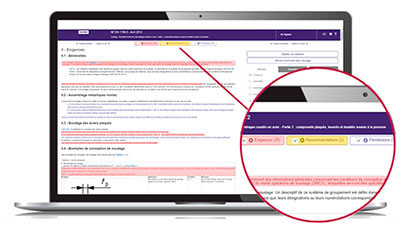
ZOOM ON ... the Requirements department

To comply with a standard, you need to quickly understand its issues in order to determine its impact on your activity.

The Requirements department helps you quickly locate within the normative text:

  • mandatory clauses to satisfy,
  • non-essential but useful clauses to know, such as permissions and recommendations.

The identification of these types of clauses is based on the document "ISO/IEC Directives, Part 2 - Principles and rules of structure and drafting of ISO documents" as well as on a constantly enriched list of verbal forms.

With Requirements, quickly access the main part of the normative text!


New: UPSELL service
Need to identify, monitor and decipher standards?