
NF EN ISO 9073-7
NF EN ISO 9073-7

NF EN ISO 9073-7

November 2024
Standard Current

Nonwovens - Test methods - Part 7 : determination of bending length

This document specifies a method for determining the bending length of a nonwoven. A formula is given for calculating the flexural rigidity of the nonwoven material from the bending length. The method is not applicable to combination-type materials (composites or laminates) in which there can be a natural twist.NOTE            This document describes a test method specific to nonwovens.

Main informations

Collections

National standards and national normative documents

Publication date

November 2024

Number of pages

20 p.

Reference

NF EN ISO 9073-7

ICS Codes

59.080.30   Textile fabrics

Classification index

G07-171-7

Print number

1

International kinship

ISO 9073-7:2024

European kinship

EN ISO 9073-7:2024
Sumary
Nonwovens - Test methods - Part 7 : determination of bending length

This document specifies a method for determining the bending length of a nonwoven. A formula is given for calculating the flexural rigidity of the nonwoven material from the bending length. The method is not applicable to combination-type materials (composites or laminates) in which there can be a natural twist.

NOTE            This document describes a test method specific to nonwovens.

Replaced standards (1)
NF EN ISO 9073-7
NF EN ISO 9073-7
November 1998
Standard Cancelled
Textiles - Test methods for nonwovens - Part 7: Determination of bending length (ISO 9073-7:1995)

Table of contents
  • 1 Domaine d'application
  • 2 Références normatives
  • 3 Termes et définitions
  • 4 Principe
  • 5 Appareillage
  • 6 Échantillonnage
  • 7 Préparation et conditionnement des éprouvettes
  • 8 Mode opératoire
  • 9 Expression des résultats
  • 10 Rapport d'essai
  • A Rigidité à la flexion, longueur de flexion et longueur d'avancée
  • Bibliographie
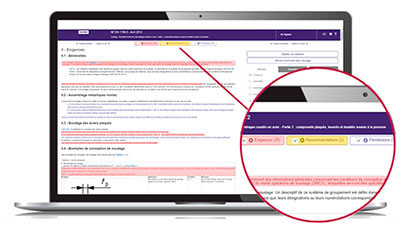
ZOOM ON ... the Requirements department

To comply with a standard, you need to quickly understand its issues in order to determine its impact on your activity.

The Requirements department helps you quickly locate within the normative text:

  • mandatory clauses to satisfy,
  • non-essential but useful clauses to know, such as permissions and recommendations.

The identification of these types of clauses is based on the document "ISO/IEC Directives, Part 2 - Principles and rules of structure and drafting of ISO documents" as well as on a constantly enriched list of verbal forms.

With Requirements, quickly access the main part of the normative text!


What is the Redline format?
New: UPSELL service
Need to identify, monitor and decipher standards?