

NF ISO 13738
NF ISO 13738

NF ISO 13738

June 2000
Standard Cancelled

Lubricants, industrial oils and related products (class L) - Family E (internal combustion engine oils) - Specifications for two-stroke-cycle gasoline engine oils (categories EGB, EGC and EGD)

Le présent document donne les spécifications internationales des huiles pour moteur deux temps à essence, à allumage commandé et qui comportent un système de balayage du carter. Ces huiles correspondent à trois catégories EGB, EGC et EGD définies dans la norme de classification NF ISO 6743-15 (indice de classement T60-514).

Main informations

Collections

National standards and national normative documents

Publication date

June 2000

Number of pages

9 p.

Reference

NF ISO 13738

ICS Codes

75.100   Lubricants, industrial oils and related products

Classification index

T60-524

Print number

1 - janvier 2005

International kinship

ISO 13738:2000
Sumary
Lubricants, industrial oils and related products (class L) - Family E (internal combustion engine oils) - Specifications for two-stroke-cycle gasoline engine oils (categories EGB, EGC and EGD)

Le présent document donne les spécifications internationales des huiles pour moteur deux temps à essence, à allumage commandé et qui comportent un système de balayage du carter. Ces huiles correspondent à trois catégories EGB, EGC et EGD définies dans la norme de classification NF ISO 6743-15 (indice de classement T60-514).
Standard replaced by (1)
NF ISO 13738
NF ISO 13738
September 2011
Standard Current
Lubricants, industrial oils and related products (class L) — Family E (Internal combustion engine oils) — Specifications for two-stroke-cycle gasoline engine oils (categories EGB, EGC and EGD)

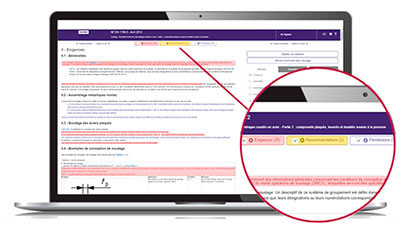
ZOOM ON ... the Requirements department

To comply with a standard, you need to quickly understand its issues in order to determine its impact on your activity.

The Requirements department helps you quickly locate within the normative text:

  • mandatory clauses to satisfy,
  • non-essential but useful clauses to know, such as permissions and recommendations.

The identification of these types of clauses is based on the document "ISO/IEC Directives, Part 2 - Principles and rules of structure and drafting of ISO documents" as well as on a constantly enriched list of verbal forms.

With Requirements, quickly access the main part of the normative text!


New: UPSELL service
Need to identify, monitor and decipher standards?