NF ISO 16646
NF ISO 16646

NF ISO 16646

July 2024
Standard Cancelled

Fusion installations - Criteria for the design and operation of confinement and ventilation systems of tritium fusion facilities and fusion fuel handling facilities

This document specifies the applicable requirements related to the design and the operation of confinement and ventilation systems for fusion facilities for tritium fuels and tritium fuel handling facilities specific for fusion applications for peaceful purposes using high tritium inventories, as well as for their specialized buildings such as hot cells, examination laboratories, emergency management centres, radioactive waste treatment and storage facilities.In most countries, a tritium quantity is declared as high for tritium inventories higher than a range of 10 g to 100 g. In the tritium fusion facilities in the scope of this document, the tritium inventory is deemed to be higher than this range for the whole site.This document applies especially to confinement and ventilation systems that ensure the safety function of nuclear facilities involved in nuclear fusion with the goal to protect the workers, the public and the environment from the dissemination of radioactive contamination originating from the operation of these installations, and in particular from airborne tritium contamination with adequate confinement systems.The types of confinement systems for other facilities are covered by ISO 26802 for fission nuclear reactors, by ISO 17873 for facilities other than fission nuclear reactors and by ISO 16647 for nuclear worksite and for nuclear installations under decommissioning. The facilities covered by these three standards, notably ISO 17873, include tritium as a radioactive material among the ones to be confined, but tritium is not their driver of the risks for workers and for members of the public. Nevertheless, the tritium quantities and risks from fusion facilities create specificities for a specific standard (e.g. in fusion facilities, tritium is the driver of routine and accident consequences). Therefore, the scope of this document does not cover the other facilities involved in tritium releases (ISO 17873, ISO 16647 and ISO 26802), even though these other facilities create tritium releases (e.g. non-reactor fission facilities, tritium laboratories, tritium removal facilities from fission plants, tritium defence facilities).


Main informations

Collections

National standards and national normative documents

Thematics

QSE, Gestion des risques et SST, Sécurité

Publication date

July 2024

Number of pages

98 p.

Reference

NF ISO 16646

ICS Codes

13.280   Radiation protection
27.120.20   Nuclear power plants. Safety

Classification index

M60-574

Print number

1

International kinship

ISO 16646:2024
Sumary
Fusion installations - Criteria for the design and operation of confinement and ventilation systems of tritium fusion facilities and fusion fuel handling facilities

This document specifies the applicable requirements related to the design and the operation of confinement and ventilation systems for fusion facilities for tritium fuels and tritium fuel handling facilities specific for fusion applications for peaceful purposes using high tritium inventories, as well as for their specialized buildings such as hot cells, examination laboratories, emergency management centres, radioactive waste treatment and storage facilities.

In most countries, a tritium quantity is declared as high for tritium inventories higher than a range of 10 g to 100 g. In the tritium fusion facilities in the scope of this document, the tritium inventory is deemed to be higher than this range for the whole site.

This document applies especially to confinement and ventilation systems that ensure the safety function of nuclear facilities involved in nuclear fusion with the goal to protect the workers, the public and the environment from the dissemination of radioactive contamination originating from the operation of these installations, and in particular from airborne tritium contamination with adequate confinement systems.

The types of confinement systems for other facilities are covered by ISO 26802 for fission nuclear reactors, by ISO 17873 for facilities other than fission nuclear reactors and by ISO 16647 for nuclear worksite and for nuclear installations under decommissioning. The facilities covered by these three standards, notably ISO 17873, include tritium as a radioactive material among the ones to be confined, but tritium is not their driver of the risks for workers and for members of the public. Nevertheless, the tritium quantities and risks from fusion facilities create specificities for a specific standard (e.g. in fusion facilities, tritium is the driver of routine and accident consequences). Therefore, the scope of this document does not cover the other facilities involved in tritium releases (ISO 17873, ISO 16647 and ISO 26802), even though these other facilities create tritium releases (e.g. non-reactor fission facilities, tritium laboratories, tritium removal facilities from fission plants, tritium defence facilities).
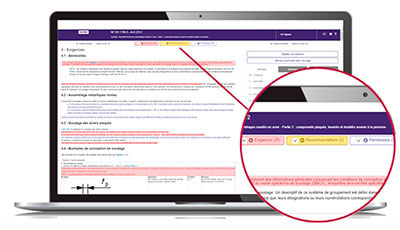
Table of contents
  • 1 Domaine d'application
  • 2 Références normatives
  • 3 Termes et définitions
  • 4 Spécificités générales du confinement des installations de fusion avec tritium ou des installations de traitement des combustibles de fusion
  • 5 Fonctions et aspects relatifs à la sûreté des systèmes de confinement et de ventilation
  • 6 Architecture et description des différents systèmes de confinement
  • 7 Exigences relatives à la conception des systèmes de ventilation
  • 8 Gestion des risques spécifiques
  • 9 Dispositions concernant la gestion et l'exploitation des systèmes de ventilation
  • 10 Contrôle-commande
  • Annexe A Recommandations sur les risques de contamination atmosphérique
  • Annexe B Exemples de technologies de détritiation
  • Annexe C Exemples de classification de sûreté
  • Annexe D Valeurs types de taux de fuite
  • Annexe E Exigences relatives aux filtres à air des systèmes de ventilation utilisés dans des installations nucléaires
  • Bibliographie
ZOOM ON ... the Requirements department

To comply with a standard, you need to quickly understand its issues in order to determine its impact on your activity.

The Requirements department helps you quickly locate within the normative text:

  • mandatory clauses to satisfy,
  • non-essential but useful clauses to know, such as permissions and recommendations.

The identification of these types of clauses is based on the document "ISO/IEC Directives, Part 2 - Principles and rules of structure and drafting of ISO documents" as well as on a constantly enriched list of verbal forms.

With Requirements, quickly access the main part of the normative text!


New: UPSELL service
Need to identify, monitor and decipher standards?