NF ISO 20669
Non-destructive testing - Pulsed eddy current testing of ferromagnetic metallic components
ISO 20669:2017 specifies the pulsed eddy current (PEC) testing technique used to perform thickness measurement on ferromagnetic metallic components with or without the presence of coating, insulation and weather sheeting.ISO 20669:2017 applies to the testing of in-service components made of carbon steel and low-alloy steel in the temperature of −100 °C to 500 °C (temperature measured at metal surface). The range of wall thickness of components is from 3 mm to 65 mm and the range of thickness of coatings is from 0 mm to 200 mm. The tested components also include piping of diameter not less than 50 mm.The technique described in this document is sensitive to the geometry of the component and applying the technique to components outside of its scope will result in unpredictable inaccuracy. This document does not apply to the testing of crack defects and local metal loss caused by pitting.ISO 20669:2017 does not establish evaluation criteria. The evaluation criteria shall be specified by the contractual agreement between parties.
ISO 20669:2017 specifies the pulsed eddy current (PEC) testing technique used to perform thickness measurement on ferromagnetic metallic components with or without the presence of coating, insulation and weather sheeting.
ISO 20669:2017 applies to the testing of in-service components made of carbon steel and low-alloy steel in the temperature of −100 °C to 500 °C (temperature measured at metal surface). The range of wall thickness of components is from 3 mm to 65 mm and the range of thickness of coatings is from 0 mm to 200 mm. The tested components also include piping of diameter not less than 50 mm.
The technique described in this document is sensitive to the geometry of the component and applying the technique to components outside of its scope will result in unpredictable inaccuracy. This document does not apply to the testing of crack defects and local metal loss caused by pitting.
ISO 20669:2017 does not establish evaluation criteria. The evaluation criteria shall be specified by the contractual agreement between parties.
-
1 Domaine d'application
-
2 Références normatives
-
3 Termes et définitions
-
4 Principes généraux
-
5 Qualification du personnel
-
6 Matériel
-
7 Mise en oeuvre sur site
-
8 Interprétation et évaluation des résultats de contrôle
-
9 Vérification des résultats de contrôle
-
10 Documentation
- Bibliographie
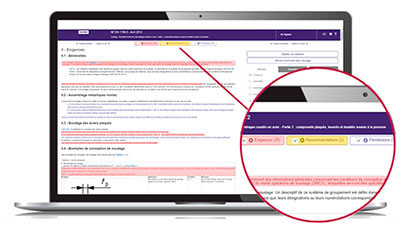
The Requirements department helps you quickly locate within the normative text:
- mandatory clauses to satisfy,
- non-essential but useful clauses to know, such as permissions and recommendations.
The identification of these types of clauses is based on the document “ISO / IEC Directives, Part 2 - Principles and rules of structure and drafting of ISO documents ”as well as on a constantly enriched list of verbal forms.
With Requirements, quickly access the main part of the normative text!

- With a single click, add a new language, the Requirements or Redline+ service and add one or more additional users.
- Whether you are in the process of acquiring a standard or it is already available in your personal space, the UPSELL service is available at every stage to help you understand it and implement it within your organization.
COBAZ is the simple and effective solution to meet the normative needs related to your activity, in France and abroad.
Available by subscription, CObaz is THE modular solution to compose according to your needs today and tomorrow. Quickly discover CObaz!
Request your free, no-obligation live demo
I discover COBAZ