NF ISO 8559-3
Size designation of clothes - Part 3 : methodology of the creation of the body measurement tables and intervals
This document describes the principles of the establishment of tables for body measurements, defines the categories of tables (related to intervals), and lists the population groups (infants, girls, boys, children, women, men) and sub-groups to be used for developing ready-to-wear garments. The body measurement tables and intervals are mainly used by the clothing sector to make the development of well-fitting products easier and more accurate.The described methodology is mainly based on the application of statistical analysis, using body dimension data. The statistical level has deliberately been kept to a low level in order for the content to be made readily comprehensible to the widest possible readership.This methodology is applicable to various sets of body dimensions. It can be useful to determine intervals for the size designation as described in ISO 8559-2. Values in the tables in this document are examples.Garment dimensions are not included in this document.It is necessary to use a general approach providing inbuilt flexibility, in order to keep the whole sizing system capable of adapting to changes (e.g. demographic criteria), because body shape and proportions for any one targeted population group differ significantly.NOTE ISO 15535 can be convenient for recording and organizing the population data.
This document describes the principles of the establishment of tables for body measurements, defines the categories of tables (related to intervals), and lists the population groups (infants, girls, boys, children, women, men) and sub-groups to be used for developing ready-to-wear garments. The body measurement tables and intervals are mainly used by the clothing sector to make the development of well-fitting products easier and more accurate.
The described methodology is mainly based on the application of statistical analysis, using body dimension data. The statistical level has deliberately been kept to a low level in order for the content to be made readily comprehensible to the widest possible readership.
This methodology is applicable to various sets of body dimensions. It can be useful to determine intervals for the size designation as described in ISO 8559-2. Values in the tables in this document are examples.
Garment dimensions are not included in this document.
It is necessary to use a general approach providing inbuilt flexibility, in order to keep the whole sizing system capable of adapting to changes (e.g. demographic criteria), because body shape and proportions for any one targeted population group differ significantly.
NOTE ISO 15535 can be convenient for recording and organizing the population data.

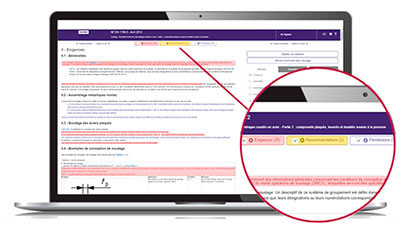
The Requirements department helps you quickly locate within the normative text:
- mandatory clauses to satisfy,
- non-essential but useful clauses to know, such as permissions and recommendations.
The identification of these types of clauses is based on the document “ISO / IEC Directives, Part 2 - Principles and rules of structure and drafting of ISO documents ”as well as on a constantly enriched list of verbal forms.
With Requirements, quickly access the main part of the normative text!

- With a single click, add a new language, the Requirements or Redline+ service and add one or more additional users.
- Whether you are in the process of acquiring a standard or it is already available in your personal space, the UPSELL service is available at every stage to help you understand it and implement it within your organization.
COBAZ is the simple and effective solution to meet the normative needs related to your activity, in France and abroad.
Available by subscription, CObaz is THE modular solution to compose according to your needs today and tomorrow. Quickly discover CObaz!
Request your free, no-obligation live demo
I discover COBAZ